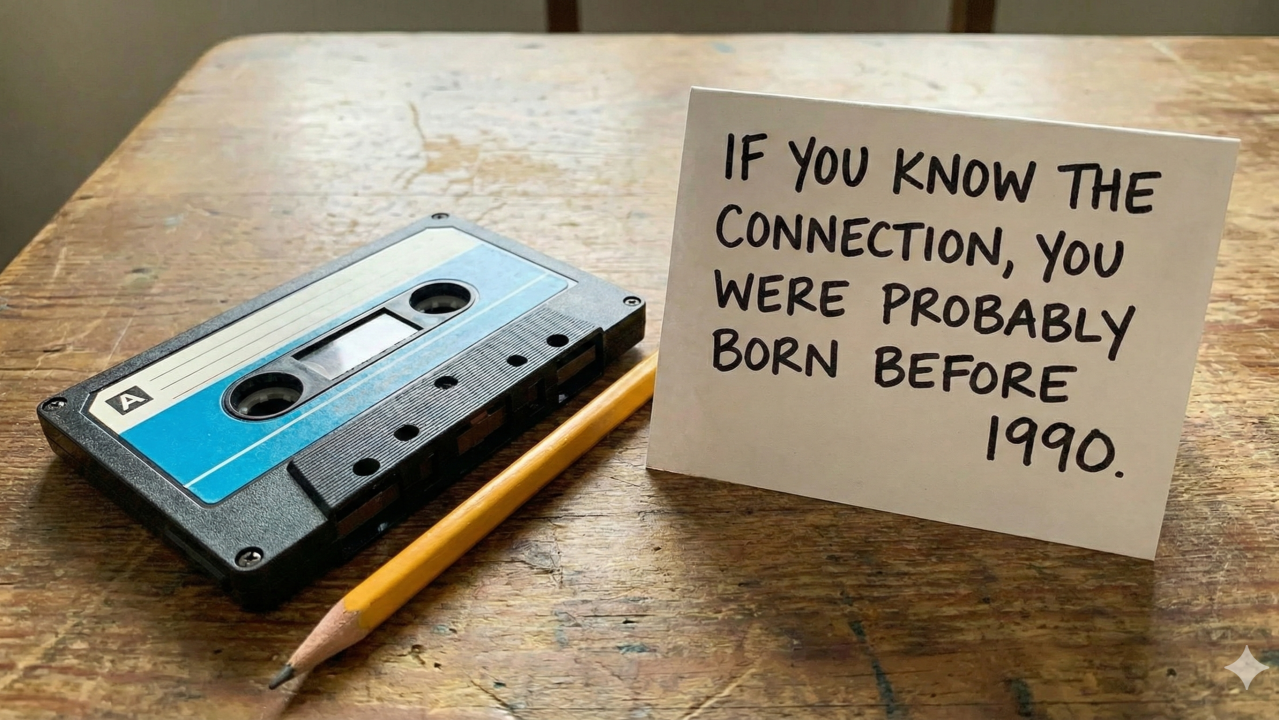
If the memory of that first cassette resonates, you were born before 1996.
Do you remember your first one? Not the one your parents bought you—the one you discovered. The one you saved for, hunted through record bins to find, brought home like treasure.
You didn’t just listen to it. You studied it. Read every liner note. Memorized the sequence. Rewound the tape with a pencil when your Walkman ate it. That album wasn’t background music. It was an event.
Or maybe you remember gathering friends around a single VHS or DVD you’d rented, everyone coordinating schedules for that one Saturday night because you only had it for 24 hours. You couldn’t simultaneously scroll Instagram. You didn’t watch a TikTok of “best moments” before watching. You were present—all of you, together, in that moment.
Those experiences stuck because they required something from you. Effort. Attention. Time. The friction wasn’t a bug—it was the entire point.
If you were born after 1995, you never experienced this kind of friction.
But here’s what’s fascinating: you’re recreating it anyway.
You camp overnight for pop-ups you could buy online. You hunt for Easter eggs in Stranger Things, freeze-framing every scene. You build 50-part TikTok theory threads about Taylor Swift lyrics. You create fan communities around niche interests with the intensity your parents saved for one band.
You never knew the world where EVERYTHING required effort. But you instinctively know that what comes easy disappears. What you work for, you remember.
Why? Because somewhere deep in our neural wiring, we all know: the hunt matters more than the convenience.
The Uncomfortable Truth About Your Frictionless Strategy
For a decade, the experience economy had one mandate: eliminate friction. Every friction. All of it.
Streamline checkout. Automate support. One-click everything. Algorithm-curate choices. We’ve treated every moment of customer effort like a disease to cure—without asking which friction was actually making customers sick, and which was making experiences memorable.
The result? We’ve optimized away the wrong things, too.
Smart automation and seamless convenience matter—genuinely. Customers shouldn’t struggle with confusing checkouts, waste time on phone trees, or face arbitrary obstacles that serve no purpose. Remove that friction ruthlessly.
But somewhere along the way, we stopped distinguishing between friction that frustrates and friction that creates meaning. We eliminated not just the pain points, but the anticipation. Not just the obstacles, but the hunt. Not just the confusion, but the effort that signals “this matters.”
The SAP Emarsys Customer Loyalty Index 2024 reveals what happened: “Silent loyalty”—passive retention driven by habit and convenience—is declining. So is “incentivized loyalty” based purely on deals and rewards.
What’s rising? True loyalty rooted in emotional connection (up to 34%) and ethical loyalty driven by shared values (30%).
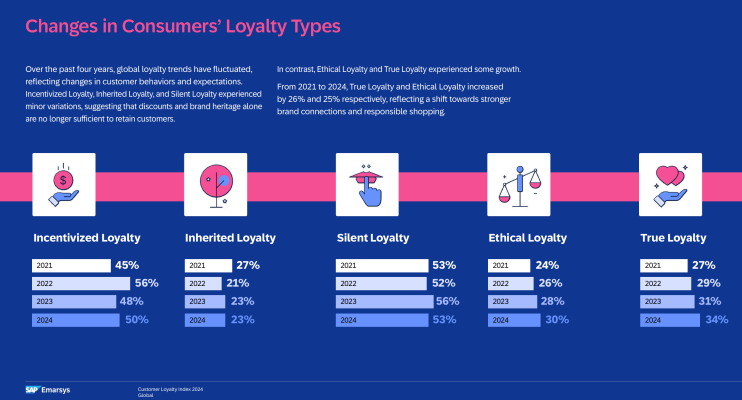
The message is clear: Optimize where it counts. But don’t optimize away what makes you worth remembering.
Your customers won’t remember how fast you delivered. They won’t remember your streamlined checkout. Those things are necessary—a prerequisite even—but not sufficient. They’ll remember the experience that required something from them. The one that felt earned. The one that became a story.
The Neuroscience of Why Hard Things Stick
Here’s what Harvard researchers discovered years ago when they coined the IKEA effect: people will pay 63% more for furniture they assembled themselves versus identical pre-assembled pieces.
This isn’t about furniture. It’s about what psychologists call “effectance“—our fundamental need to successfully produce outcomes in our environment. When you build something, struggle with something, work for something, your brain registers completion as evidence of competence. The labor becomes part of the story. And the story is what you remember.
Neuroscience backs this up: emotional arousal creates brain states that persist for 9-33 minutes after an arousing event, enhancing memory encoding for everything encountered during that window. When you hunt for something, when you struggle, when you earn an outcome—you’re creating the emotional conditions that tell your brain: “This matters. Remember this.”
This is why physical books outperform digital for memory retention. Studies show readers of a 28-page mystery story tested better on plot chronology when they read print versus Kindle. Physical books provide spatial navigation cues—your brain creates a cognitive map. You remember information appeared near the top of a left-hand page, about a third through.
Scrolling removes these landmarks. fMRI studies show print activates brain regions for emotional processing and spatial memory more than screens. The tactile experience isn’t decorative. It’s load-bearing for memory formation.
This is the same reason browsing a record store creates more lasting memories than Spotify’s infinite scroll. The physical effort of searching, the spatial memory of where genres live, the tactile feedback of pulling a record, examining artwork, reading liner notes—all of this sensory richness creates multiple pathways for memory encoding.
Spotify delivers music with zero friction. It also delivers zero context, zero effort, and therefore zero memorable experience around the discovery.
Dopamine vs. Oxytocin: The Chemicals Behind What Sticks
Here’s where the neurochemistry gets uncomfortable for anyone banking on easy experiences.
Dopamine drives seeking, anticipation, reward. It’s the hit from the next swipe, the next episode, the next scroll. Dopamine says “more, faster, what’s next?” It’s the chemical of instant gratification.
Oxytocin is released during sustained bonding, shared effort, meaningful connection. Research on prairie voles—one of few monogamous rodent species—shows pair bonding requires both systems. Block either one, and bonds don’t form.
Dopamine provides initial attraction. Oxytocin converts that into lasting attachment through repeated, effortful interaction.
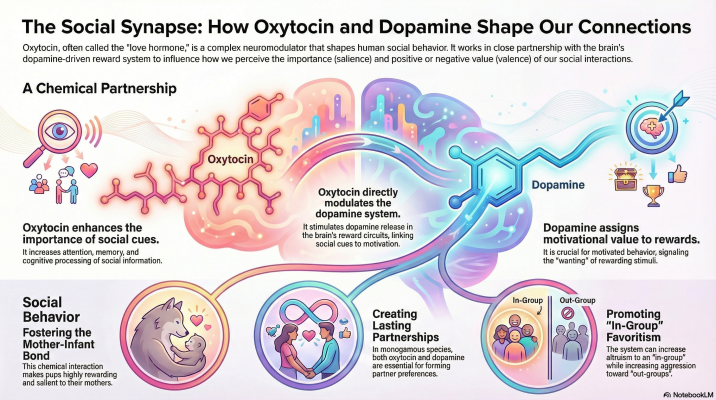
This is why swiping through dating apps feels exciting but builds nothing. Why binging a series creates no water-cooler conversations. Why your algorithm-curated feed is instantly forgettable. If you think of dopamine as the compass pointing you toward a destination and providing the energy to walk, oxytocin is the anchor that allows you to stop and build a home once you arrive. Without the anchor, you are destined to keep walking toward the next horizon.
Meaningful experiences—the ones worth remembering, worth talking about, worth paying for—live in oxytocin territory. And oxytocin requires effort.
The Brand That Weaponized Inconvenience
Trader Joe’s shouldn’t work.
No online shopping. No delivery. No loyalty program. No app. Not even sales or coupons. Their parking lots are legendary hellscapes. Lines snake through crowded aisles. You can’t price-compare their exclusive products anywhere else.
By every modern CX metric, they should be failing.
Instead, they consistently rank first in brand loyalty and satisfaction among consumers. People pack suitcases full of Trader Joe’s products when traveling. They write letters begging for stores in their cities. One unofficial Instagram account (@traderjoeslist) has 1.9 million followers just cataloging products. The Trader Joe’s Subreddit has a staggering 367k subscribers.
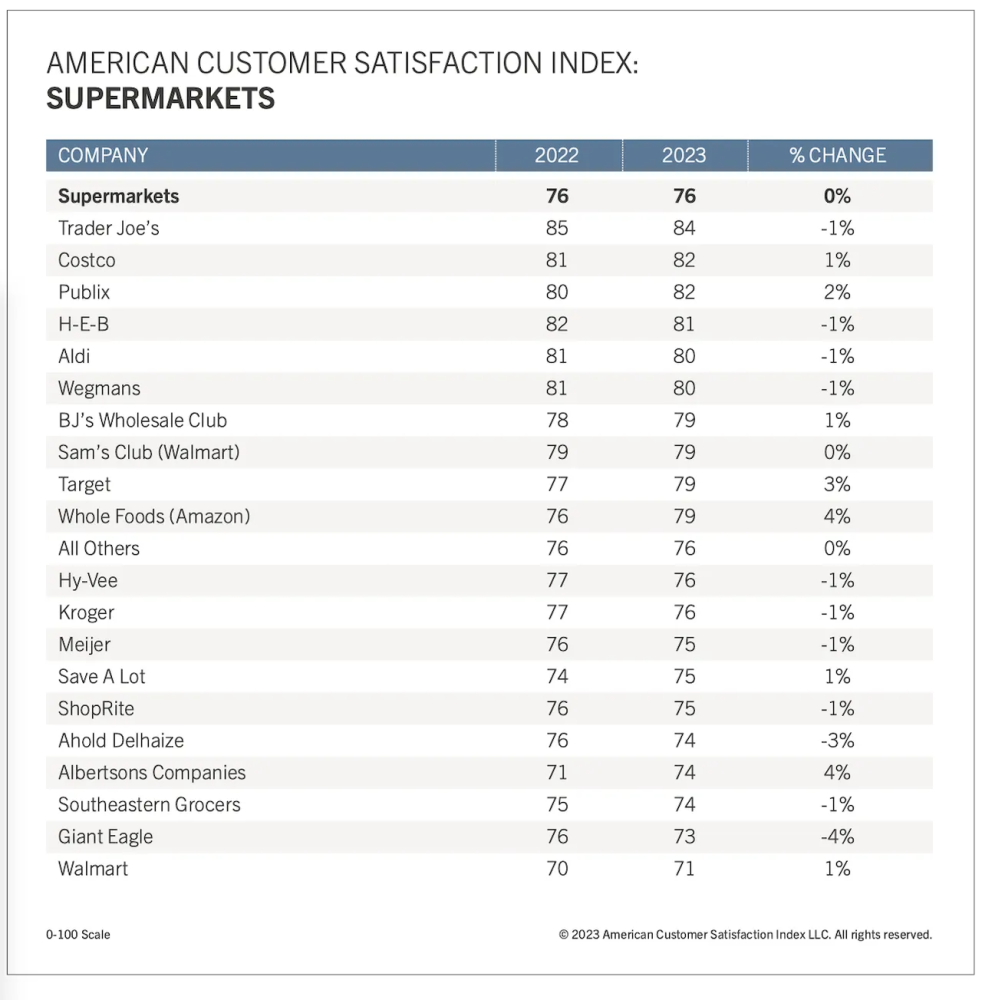
Why? Because the struggle is the story.
The hunt through crowded aisles creates serendipitous discovery. The treasure hunt for seasonal items builds anticipation. Employees stocking during store hours deliberately creates more interaction. These aren’t inefficiencies—they’re the experience architecture that turns grocery shopping into something worth remembering.
In official communications, Trader Joe’s execs often frame their digital avoidance almost proudly, as a differentiator. They “roast” the industry’s tech trends: In a March 2025 episode of “Inside Trader’s Joe’s”, they quipped that the proliferation of in-store digital ads and screens in other chains is “the natural result of an undifferentiated shopping experience… an admission of defeat that shopping in those regular grocery stores was awful.”
The tongue-in-cheek point they make is that Trader Joe’s doesn’t need to monetize via digital ads or collect data on customers because its stores aren’t “awful” – they’re places people genuinely enjoy visiting. This back-to-basics ethos (friendly staff, surprising products, no distractions) is deliberately at odds with the high-tech, omnichannel direction much of retail is headed.
They’re not selling groceries. They’re selling memories. And memories require effort to form.
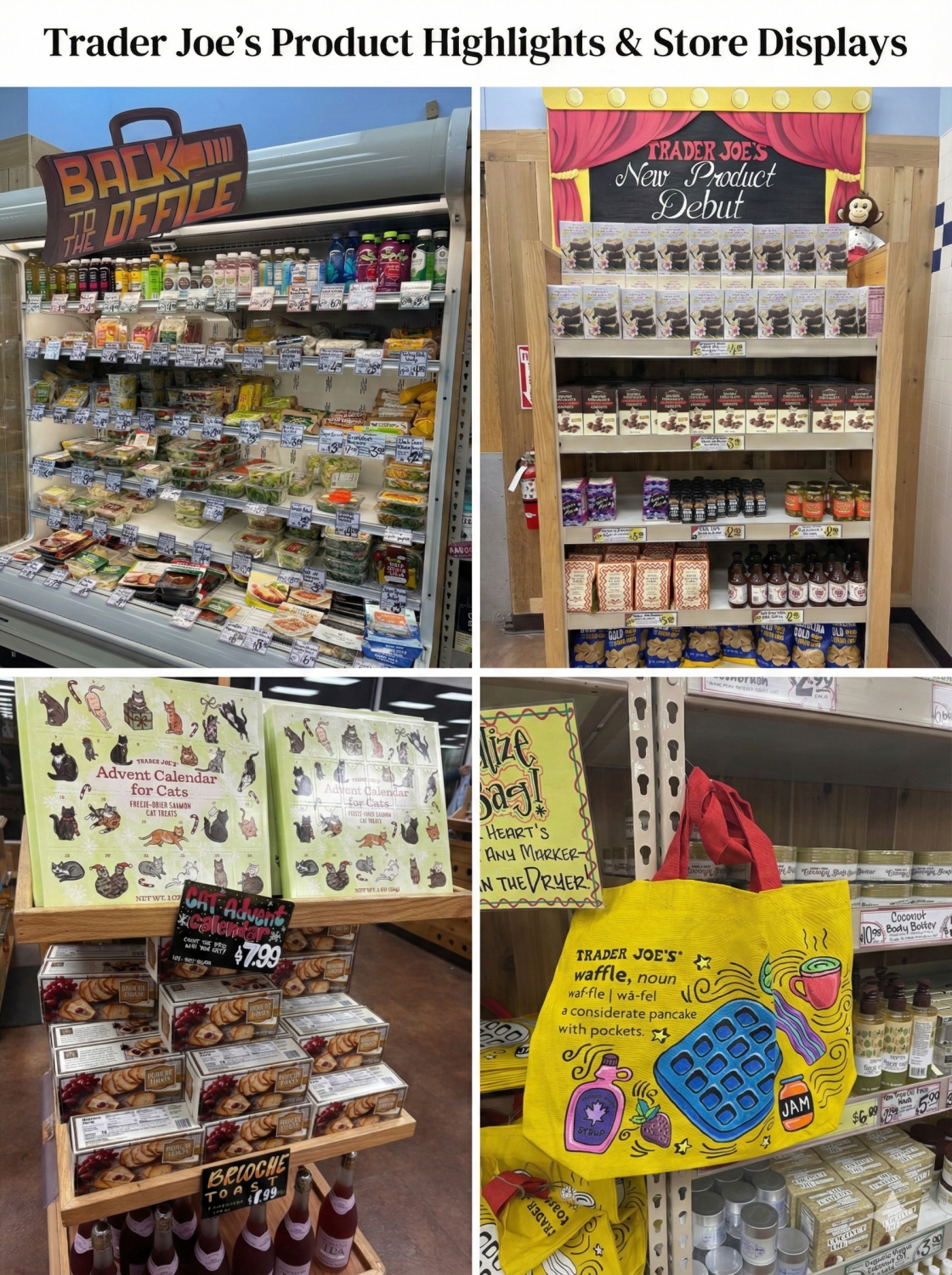
Meanwhile, grocers who optimized everything are discovering their customers feel nothing for them. Research shows companies wrongly assumed digital-only customers were most profitable. Instead, they’re losing their most profitable customers—multichannel shoppers who want both digital convenience andhuman connection.
Omnichannel buyers are more loyal than digital-only buyers: On average, omnichannel buyers churn after 4.2 bad experiences vs. only 1.3 bad experiences for digital-only patrons (Grocery Doppio, State of the Industry: The Omnichannel Grocery Shopper)
The Line Between Good Stress and Bad Stress
Not all friction is created equal.
Bad stress removes agency:
- Confusing navigation
- Unclear policies
- Arbitrary obstacles
- Making customers solve your operational problems
Good stress gives agency:
- Building anticipation (Supreme’s limited drops)
- Requiring meaningful choice that creates ownership (Nike By You)
- Engaging multiple senses for rich encoding (building with Lego)
- Facilitating shared effort that builds bonds (those overnight lines for pop-ups)
The dividing line: Does this friction create control or remove it?
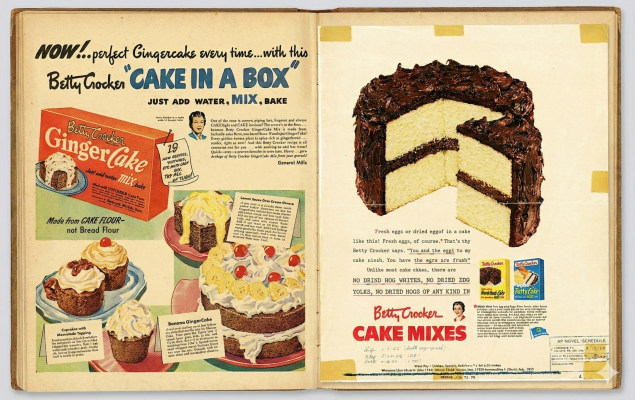
Betty Crocker discovered this in 1949. Their cake mix only required adding water—but in consumer research, consumers asked if they can add their own ingredients. The new formula invited bakers to crack in a fresh egg. Sales soared. By giving customers a small challenge, they turned passive consumers into proud bakers – whether because of the “Ikea Effect” as famously attributed to this story, or simply because this led to better cakes.
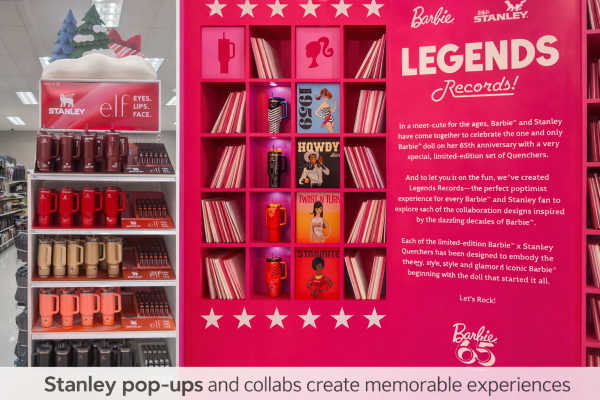
Stanley turned a $40 tumbler into a cultural phenomenon through strategic scarcity. Limited colors. Retailer exclusives. Overnight lines. Target sellouts in under 4 minutes. Pop up events. Collabs. Revenue increased tenfold to approximately $750M in 2023.
The “stress” of maybe-not-getting-one created more brand heat than perfect availability ever could.
The Generations That Get It
Gen Z will never flip through liner notes on a first album they saved for. They’ll never coordinate five friends’ schedules around a single rented DVD. They’ve never known the thrill of finding that one record store that had the import you’d been hunting for months.
They don’t know what they’re missing.
But watch them camp outside a pop-up. Watch them drive across town for a bakery that doesn’t deliver. Watch them pay resale prices for limited sneakers they could’ve bought easier elsewhere.
They’re searching for the same thing we all are: experiences worth remembering.
The Brands Rewarding the Hunt
Maybe that’s why Stranger Things became a cultural phenomenon. Gen Z fell in love with a show about the very friction-filled experiences they’d never had—mixtapes requiring effort to make, letters that made waiting beautiful, D&D campaigns demanding presence and imagination, arcade games you couldn’t pause or save.
And the show itself became an Easter egg treasure hunt. Hidden references. Background details requiring frame-by-frame analysis. Fans spent hours freeze-framing, theorizing, discovering together. The Duffer Brothers made finding things hard—and fans loved them for it.
Smart brands noticed. Coca-Cola brought back New Coke as a limited Stranger Things tie-in—creating scarcity around something nobody wanted in 1985. It sold out. Because the hunt matters more than the product.
Tesla hides video games in their cars. Google embeds playable Easter eggs in search results. Spotify tucks hidden playlists in podcasts. Apple parks secret features in iOS that only the curious discover. These aren’t accidents or bugs—they’re intentional friction. Rewards for the people who pay attention. Bonding moments for communities who discover and share.
Easter eggs say: “We value the hunters, not just the clickers. We reward curiosity, not just convenience.”
They create what frictionless experiences can’t: stories worth telling. When you discover something hidden, you don’t just consume it—you evangelize it. You become part of a community of people who also found it. The effort creates the bond.
The Choice in Front of You
Because somewhere in our collective unconscious, we know convenience alone is empty. We know easy is forgettable. We know that the best stories—the ones we tell for years—always start with “It was impossible to find, but…” or “I didn’t think I’ll make it, but…”
Your frictionless, optimized, automated experience? It’s already forgotten.
The brands winning the next decade won’t eliminate all stress. They’ll understand which stress to eliminate and which to cultivate—the productive kind that turns transactions into memories and customers into storytellers.
What You’re Actually Optimizing For
If you’re optimizing for forgettability, you’re winning that game.
Memory formation requires emotional arousal, cognitive engagement, or both. When you over-optimize for frictionless efficiency, you’re eliminating both.
Your strategic audit:
1. Identify destructive stress and kill it Anxiety-inducing friction that serves no purpose. Confusing checkouts. Unclear policies. Long holds with no resolution. This is table stakes—remove it all.
2. Find productive stress and preserve it Friction that creates anticipation, requires choice, engages senses, facilitates connection. Maybe that’s curated selection over infinite choice. Maybe it’s requiring customers to visit in person for certain experiences. Maybe it’s strategic scarcity.
3. Design for memory, not just conversion What do you want customers to remember? Then engineer the emotional arousal and sensory richness to make that stick.
4. Hide rewards for the curious Easter eggs, hidden menus, secret experiences. Create discoveries that make customers feel like insiders and give them stories to share.
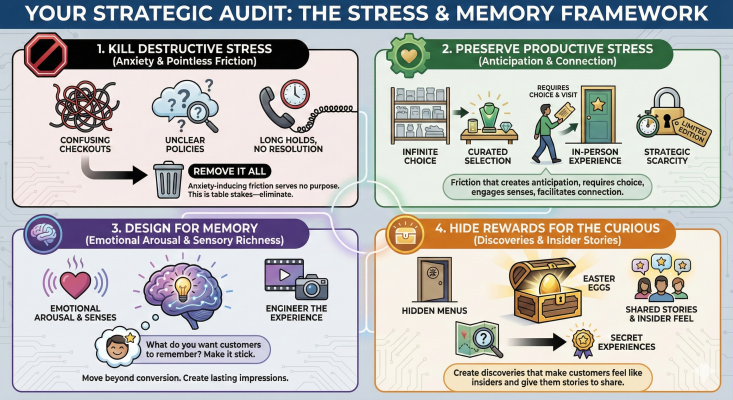
Because in the end, customer experience isn’t what you design. It’s what they remember.
And memory? Memory requires work.
I’ve spent 25 years helping companies spot trends before their competitors through strategic research and cross-industry pattern recognition. I work as a fractional Director of Strategic Research for brands that need strategic thinking.
If you’re wondering what you’re optimizing for—or what’s coming next that your data won’t show you—let’s talk: hamutal@researchci.com
My book The Joy Dividend publishes January 1, 2026. More strategic research every Monday—subscribe here.