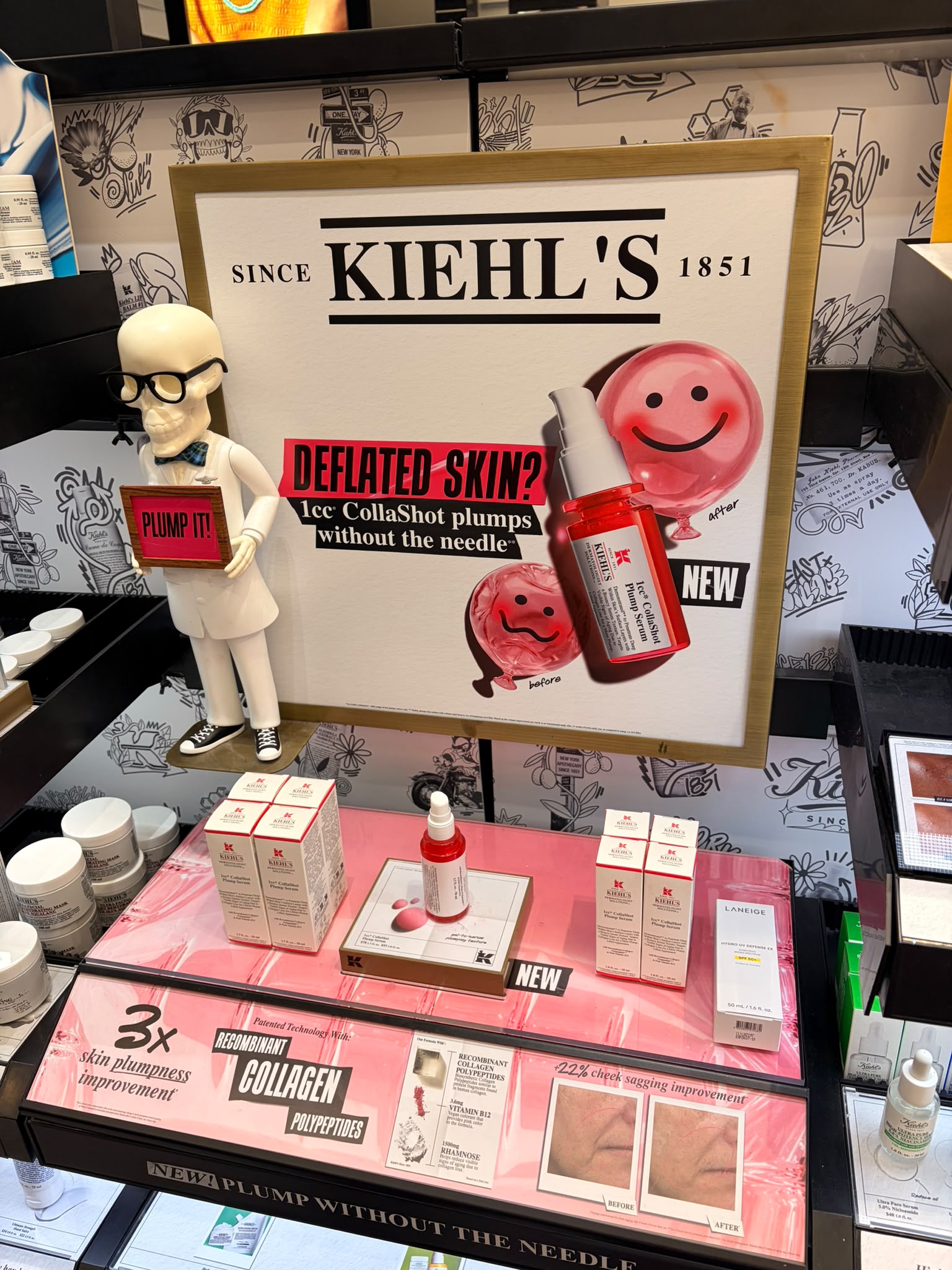
Yesterday at Sephora, a Kiehl's display stopped me. In large type, it asked: “Deflated skin?” The display itself did not mention GLP-1s. But the message felt different enough to make me wonder whether it reflected the visible effects of rapid, medication-assisted weight loss. When I checked Kiehl's website, the connection was indeed there: the product page described a clinical test involving consumers prescribed a GLP-1 for weight management.
It was a small retail moment, but a revealing one. A concern associated with rapid weight loss had moved from online conversation into product development and retail merchandising—even if the GLP-1 connection remained below the surface in store.
This is the wider story businesses need to understand. GLP-1 medications are not simply changing appetite. They may be creating a period of consumer transition—physical, psychological, social and financial—that extends well beyond food.
Schieber Research examined published studies, consumer discussions, surveys and emerging company responses across categories. The result is Beyond the Plate, a new white paper exploring what GLP-1 adoption could mean for beauty, apparel, fitness, travel, hospitality, retail and everyday identity.
Download the full white paper PDF ↗
The connecting idea: the body may change faster than the self.
That gap creates needs that are easy to miss if we look only at pounds lost or calories consumed.
Beauty is beginning to name the visible aftermath
“Ozempic face” began as cultural shorthand. It is now turning into a product and service category.
Kiehl's is not alone. IMAGE Skincare explicitly markets a GLP-1 skin complex around the appearance of deflation, deep wrinkles, dehydration and diminished density. SkinCeuticals has placed an existing anti-aging regimen into a clinical protocol involving GLP-1 users and an ultrasound procedure.
The commercial opening is real, but so is the trust risk. A topical product can support hydration, texture and the appearance of firmness; it cannot replace lost facial fat. Brands entering this space will need unusually clear language about what was tested, on whom, and what the product can realistically do.
The wardrobe becomes temporary infrastructure
Rapid size change creates an unusual consumer problem: what should someone buy when the body they have today may not be the body they have six months from now?
Stitch Fix calls this a “Bridge Wardrobe.” Its guidance combines adjustable silhouettes, updated body images, stylist support and a ThredUp pathway for clothing that no longer fits.
Rent the Runway offers a different kind of signal. CEO Jennifer Hyman reported that more customers were moving into smaller sizes than at any point in the company's 15-year history. Customers were also becoming more willing to experiment with their style, according to Modern Retail.
Rent the Runway has not announced a dedicated GLP-1 program. But rental may be uniquely suited to the transition: access without long-term size commitment, frequent fit changes and permission to explore a new silhouette before deciding whether it feels like “me.”
Fitness shifts from earning weight loss to protecting capability
If medication can reduce weight without the consumer following the familiar cultural script of restriction and exercise, what becomes the new job of fitness?
One answer is muscle preservation. Equinox has launched a tailored GLP-1 coaching protocol built around assessment, exercise, movement, nutrition, regeneration and habit development. Life Time's MIORA ecosystem connects medical options with diagnostics, nutrition and training guidance inside select clubs.
This suggests a meaningful repositioning. Fitness may become less about paying a moral price for weight loss and more about protecting strength, metabolism, mobility and independence. The emotional promise changes from “earn the body” to “build the capability to live in it.”
Travel can support the transition, not just accommodate a diet
Healthier choices and smaller portions matter, but they are only the beginning.
Lanserhof offers medically supervised Weight Loss Injection Management programs incorporating diagnostics, body-composition monitoring, nutrition planning and personal training. Skyterra Wellness Retreat explicitly supports guests who are considering, using or weaning off GLP-1 medication, combining the medication journey with fitness, nutrition, habits and post-stay accountability.
The deeper opportunity is continuity. A traveler using a GLP-1 may need portion flexibility, protein-forward food, privacy, fatigue-aware activity, medication storage and a plan that survives checkout. The best experience will not make the guest feel like a medical exception. It will quietly redesign the environment around changing needs.
What businesses should be asking now
The point is not to attach “GLP-1” to every existing product. It is to understand which consumer jobs are genuinely changing.
- Which purchases are being accelerated, delayed or avoided while the body changes?
- Where does uncertainty about final size, appearance or identity create financial risk?
- Which services can help people feel capable, socially comfortable and more like themselves?
- Where would explicit GLP-1 messaging feel useful—and where would it feel stigmatizing or opportunistic?
- What happens when treatment slows, stops or becomes unaffordable?
These questions reach beyond a single drug or demographic. They point toward a broader market for transition support: products, services and experiences designed for a consumer whose body, habits and identity may be changing at different speeds.
New Schieber Research white paper
Beyond the Plate: GLP-1 Consumer Transition
The full report connects emerging evidence across beauty, apparel, fitness, travel, social life, retail and financial services. It includes documented company responses, consumer language, an industry-effect heatmap and questions leaders should investigate next.
About Schieber Research
Schieber Research, LLC is an independent consumer research and strategy consultancy led by consumer expert Hamutal Tula Schieber. Drawing on 26 years of research and strategy experience, the firm helps organizations look beyond the obvious conversation, connect signals across categories and identify what matters next.
This article and white paper provide market and consumer analysis, not medical advice.