
A few weeks ago I ordered a ride in Israel through Gett. The app showed me an estimated fare rather than the price I would actually pay. The driver came, the ride was ordinary, and the final number was not outrageous. But somewhere on the way I noticed a feeling I had not had in years—the faint, specific anxiety of getting into a car without knowing what the journey would cost.
What surprised me was not the anxiety. It was that the anxiety was unfamiliar. As a Geriatric Millennial, I know too well that this used to be the entire experience of taking a taxi. You got in, watched the meter climb, and hoped that traffic or the route or some misunderstanding at the end would not push the fare past what you had budgeted for. I had not remembered that as stressful, because I had stopped remembering it at all.
The uncertainty had been removed so completely that its return did not register as an older way of doing things. It registered as something wrong with the product.
Uber's disruption is usually filed under transportation—ordering a car from an app, matching riders to drivers, killing the street hail. But the more consequential thing it changed was what passengers were willing to tolerate not knowing: the price, the route, the driver's location, the arrival time, the progress of the ride.
That mechanism is easy to see in ride-hailing because the change happened fast enough to be remembered. It is harder to see where it worked completely, which is the case worth looking at.
The invisible work customers stop noticing
Autosave may be the purest example precisely because nobody talks about it. Nobody posts enthusiastically about a document saving itself, and no software company has ever built a campaign around it. But before autosave, working on a document required a quiet second job—a small supervisory process running somewhere behind the writing, tracking when you last saved and what would happen if the power went out or the application closed the wrong window. It did not make the work slower.
It made the work less secure, because part of your attention had to stay outside the work, monitoring the conditions under which the work might disappear.
Because everyone performed this vigilance, it did not look like labor. It looked like using a computer. Then it ended—not by making the supervision easier or faster, but by removing the need for it. And it ended thoroughly enough that most people can no longer remember doing it.
The same mechanism runs in the other direction, and that turn is where it becomes a strategy problem rather than a design observation.
When normal becomes unacceptable
Resort fees, booking fees and service charges were, for a long time, ordinary commerce. Everybody disliked them. Nobody read them as dishonest. They were how the category worked, and the cost of that arrangement was a low background suspicion that the number on the screen was not the number you would pay. Then all-in pricing appeared in enough places to become legible as an option, and the hidden fee stopped reading as friction. It started reading as deception.
Airbnb watched this happen in real time: under public pressure over cleaning fees in late 2022, it built a display showing the total price including fees, and made it a toggle rather than the default. The capability sat there for two and a half years before the company switched it on worldwide, a month before the FTC's rule on upfront disclosure of mandatory fees took effect. The rule did not invent that judgment. It ratified a standard customers had already adopted, and that at least one company had already built for and chosen not to ship.
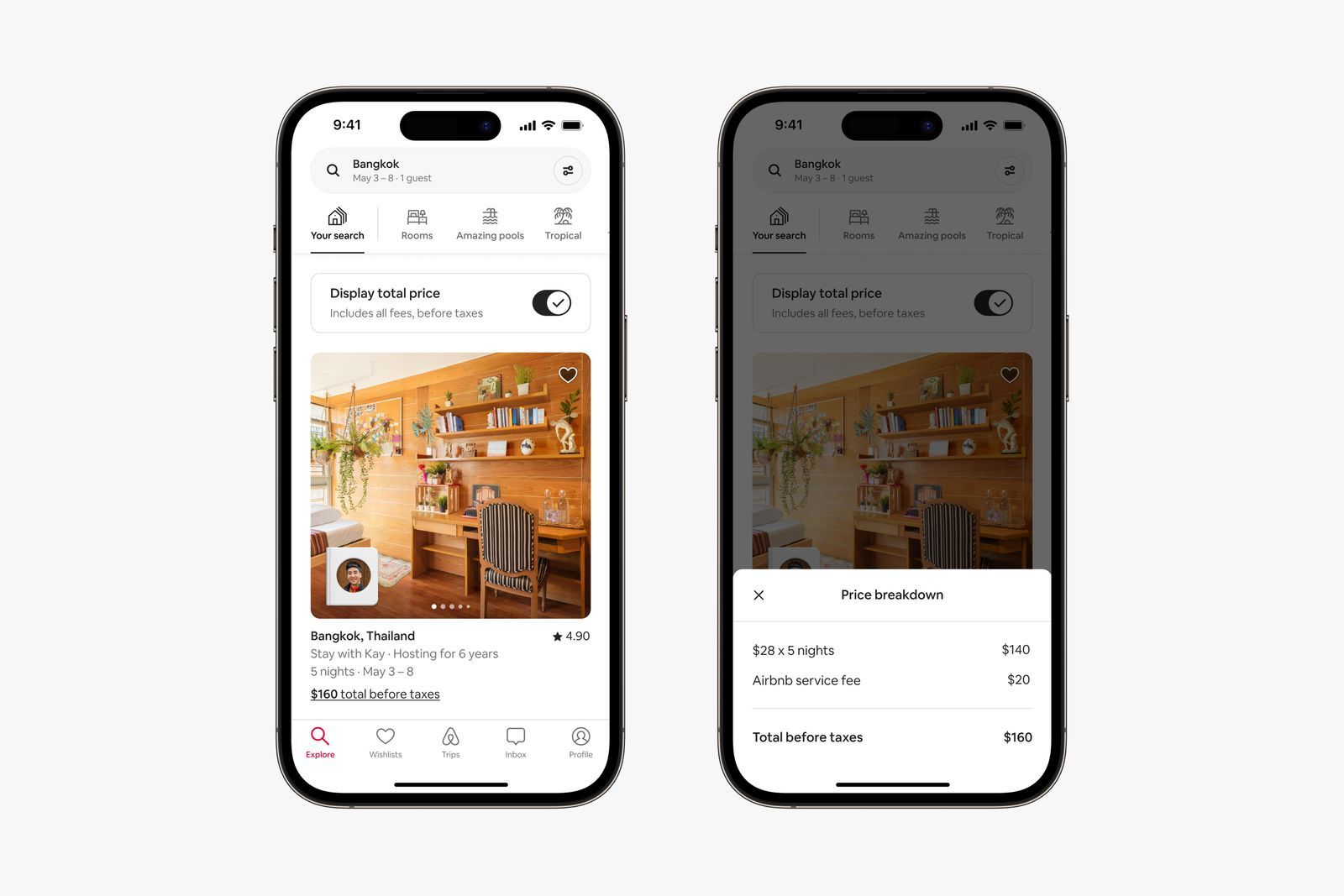
That is the part worth sitting with. The baseline does not only rise. It reaches backward and re-reads the past. A practice that was tolerated as a category norm becomes evidence of bad faith, and the brands still running it are judged against a standard that did not exist when they built it.
Which brings up the uncomfortable economics underneath all of this.
Every advantage becomes a standard
Every one of these innovations gets absorbed. Upfront pricing was a differentiator in the mid-2010s and is now a condition of being allowed to operate. The moving dot on the map was remarkable, and is now the reason a delivery without one feels like negligence. Autosave was a feature and is now a floor so far below notice that its absence would be treated as a bug report. None of them stayed an advantage.
They became the terms of entry, and the brands that got there first were paid for a few years and then absorbed into the standard along with everyone else.
This makes stress reduction the strangest line in the budget. It is the only category of investment where complete success is indistinguishable from having done nothing, because the evidence that it worked is the absence of a feeling the customer can no longer name. You cannot put it in a deck. There is no lift to point at.
The returns are things that did not happen—the calls that were not made, the carts that were not abandoned, the quiet decision not to look at a competitor that was never registered as a decision at all. Joy compounds visibly and gets the credit. Calm is what makes the compounding possible, and it gets no credit by design.
Your competitive set may be teaching you the wrong standard
Which is why watching only your own category is a losing position. Customers do not hold a separate tolerance for each industry they buy from. They hold one, and it gets reset by whoever moved most recently, anywhere. The company that re-rates your customers' expectations is usually not in your competitive set and will never appear in your tracking study.
It taught them that the price is knowable, or the wait is visible, or the return is instant, and they carried that home to you without announcing it—and without any sense that they were now asking you for something you had never been asked for before.
This is the insight behind online car buying. Nobody looked at the dealership and asked how to make it a better dealership. They asked why buying a car could not feel like buying anything else, which is a question customers had been asking privately for decades with no way to act on it. The haggle was never a pricing mechanism.
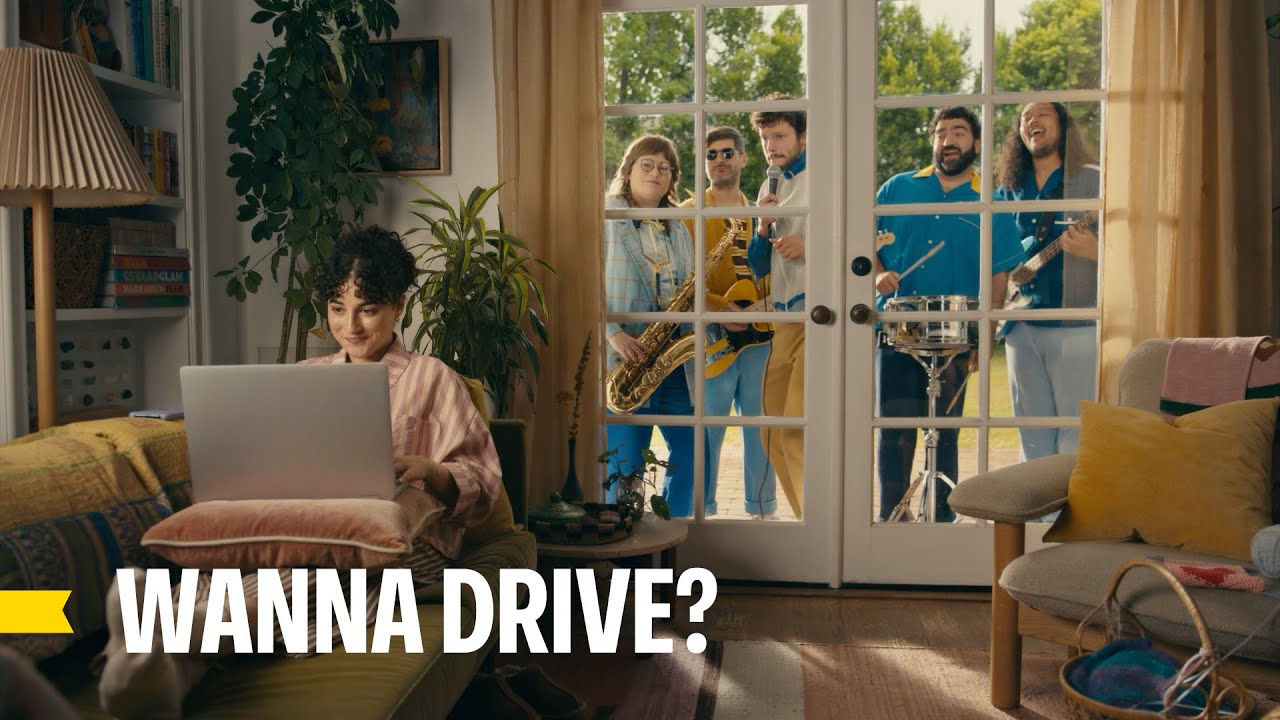
It was a vigilance task—a continuous background calculation about whether you were being taken—and every other category had been quietly teaching people that they should not have to run it. CarMax made the alternative explicit in its “Wanna Buy Your Way?” campaign.
What are your customers still watching?
So the useful question is not which innovation is coming next. The essays that try to forecast the next moving dot mostly produce feature lists, and the feature was never the point. The question is where your own customers are still doing supervision work on your behalf—still checking, still confirming, still keeping one eye on something because you have not given them a reason to stop watching.
That is the hardest thing in the business to see, because you are looking at the wrong set. You are benchmarking against the people who taught customers the same tolerance you did. It looks like the category to you. It looked like the category to the taxi industry too.
What are your customers still watching?
About the author
Hamutal (Tula) Schieber is the author of The Joy Dividend: How Brands Win by Reducing Stress and Sparking Delight and the founder of Schieber Research, where she works with brands on the emotional economics of customer experience. She writes on stress, joy and what customers are actually paying for, speaks to CMO and CX audiences, and works with teams on Joy–Stress audits of their customer journeys.