You can buy anything on your phone. Literally anything. A cashmere sweater, a bag of high-protein tortilla chips, a $290 pair of sunglasses, a Korean serum with snail mucin — all delivered to your door by tomorrow. So why are some physical stores more packed than ever?
Because the ones winning right now have figured out something most retailers haven't: nobody needs your store. The moment you accept that, everything changes. You stop designing for transactions and start designing for feelings. And the stores that have made that shift aren't just surviving — they're growing at rates that make their e-commerce-only competitors jealous.
The experiential retail market hit $132 billion in 2025, growing at four times the rate of traditional retail. Stores that build immersive, emotionally engaging environments see longer dwell times and higher sales. But here's what most of the breathless "experiential retail" coverage misses: it's not about having a cool store. ״Cool״ fades. What lasts is when a store makes people feel something specific — calmer, more playful, genuinely surprised, or like they belong to something.
In The Joy Dividend, I outline four strategic levers that create lasting emotional connection: The Calm Advantage (stress-free by default), Playful Design (joyful by nature), Surprise & Delight (״I didn't expect that!״), and Connection & Purpose (״we're in this together", "we see you"). Most stores, if they're doing experiential retail at all, lean on one. The best ones stack multiple pillars into a single visit. A few rare ones hit all four.
Let me show you what that looks like.
There is a four-story building on the Spui in Amsterdam that used to house the city's very first department store. Today it houses something far more interesting. Rituals Cosmetics — a €2.43 billion brand that grew 16% in 2025 and now operates over 1,500 stores globally — turned it into what they call the House of Rituals. It is the most complete Joy Dividend case study I've encountered in physical retail.
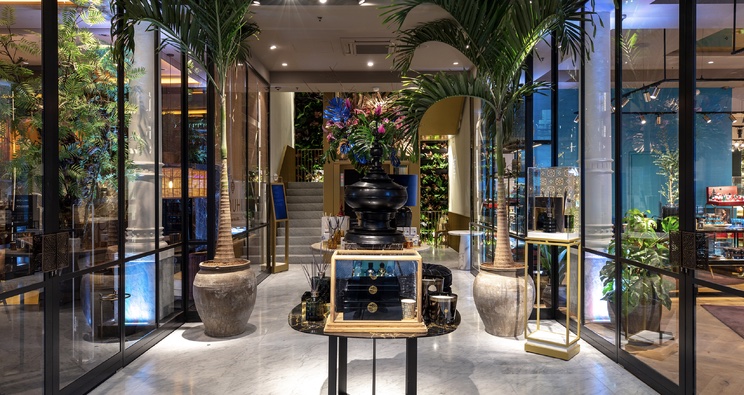
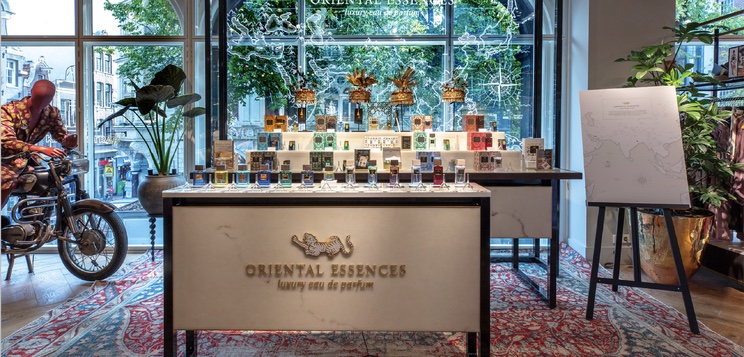
Walk in at street level and you're greeted by a sensory maze of products organized not by category but by scent family — Sakura, Hammam, Jing — each with its own immersive corner. There is a restaurant called Rouhi ("my soul") serving Arabic-Asian fusion. You didn't walk in expecting dinner. That's the first surprise. Go upstairs and the second floor reveals a premium home collection with a bespoke perfume bar offering 25 customizable eau de parfums. A digital scent-matching system lets you enter the name of your favorite perfume and finds the closest Rituals equivalent. That's Playful Design — treating grown-ups like curious, sensory beings.
The third floor is a body spa. But the real transformation happens on the fourth floor: the world's first Mind Spa. Rituals calls it the Mind Oasis. You recline in a zero-gravity chair while breathwork techniques, 4D sound, haptic vibrations, and light therapy guide your brain into a theta state — a meditative frequency between waking and sleeping. Eighty-six percent of guests report instant stress relief. Seventy-six percent say 30 minutes of the brain massage feels like two hours of sleep. This isn't a gimmick bolted onto a retail experience. It's a €2.43 billion brand saying: the most valuable thing we can offer you is not a product. It's how you feel when you leave.
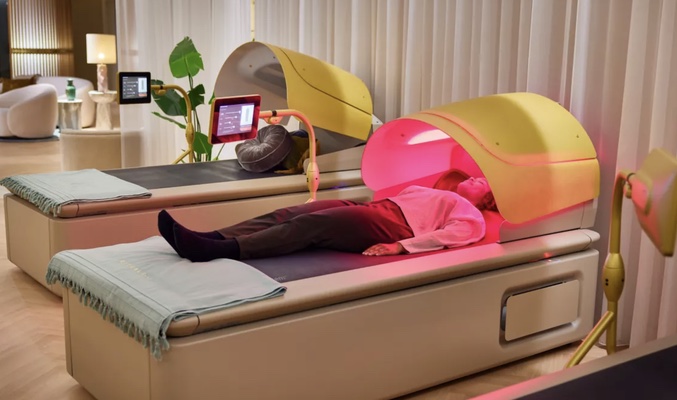
What makes Rituals remarkable from a strategic standpoint is that they've scaled this. The Mind Oasis is no longer a one-off in Amsterdam. It now operates in 11 locations across the Netherlands, Spain, France, and the UK — including inside Schiphol Airport, where one-third of international passengers report experiencing stress during their journey. They opened one on Oxford Street in London, one of the most chaotic retail corridors on earth. The deliberate placement of calm in the middle of chaos is the point. Rituals CEO Raymond Cloosterman put it plainly at Shoptalk Europe 2025: "For us, this is what immersive retail is all about. It's not about the products; it's about the total experience and the guts to take it further."
And they're doubling down. In 2026, Rituals plans to refit 1,500 stores, expand further into Asia, and continue the Mind Oasis rollout. That's not a marketing experiment. That's a company restructuring its entire retail footprint around the conviction that reducing stress is a competitive moat.
I wrote about Rituals in my book as a Calm Advantage exemplar: "Walk into a Rituals store, and you're gently disconnected from the hectic outside world. There are areas where you're invited to take time — wash hands with luxurious scrub, enjoy brief hand massages, sip hot tea. The space is deliberately designed as an oasis of calm. Rituals now enjoys some of the highest customer loyalty in its markets. By slowing the tempo, they deepen engagement — customers linger longer, connect emotionally with products, and leave feeling refreshed rather than exhausted."
The House of Rituals takes that principle and builds a four-story monument to it. Calm Advantage on the spa floors. Playful Design in the scent-matching technology and sensory product displays. Surprise & Delight in the staged reveal — every floor resets your expectations of what this place is. Community & Connection through bookable group experiences for birthdays, baby showers, and corporate events, plus a café that transforms the store into a social gathering space. All four pillars, one building. And €2.43 billion in revenue to prove it works.
Now let me zoom out. Because while Rituals is the most complete example, the Joy Dividend is showing up across every retail category — and the most interesting cases are the ones where brands lean hard into a specific pillar and make it their entire identity.
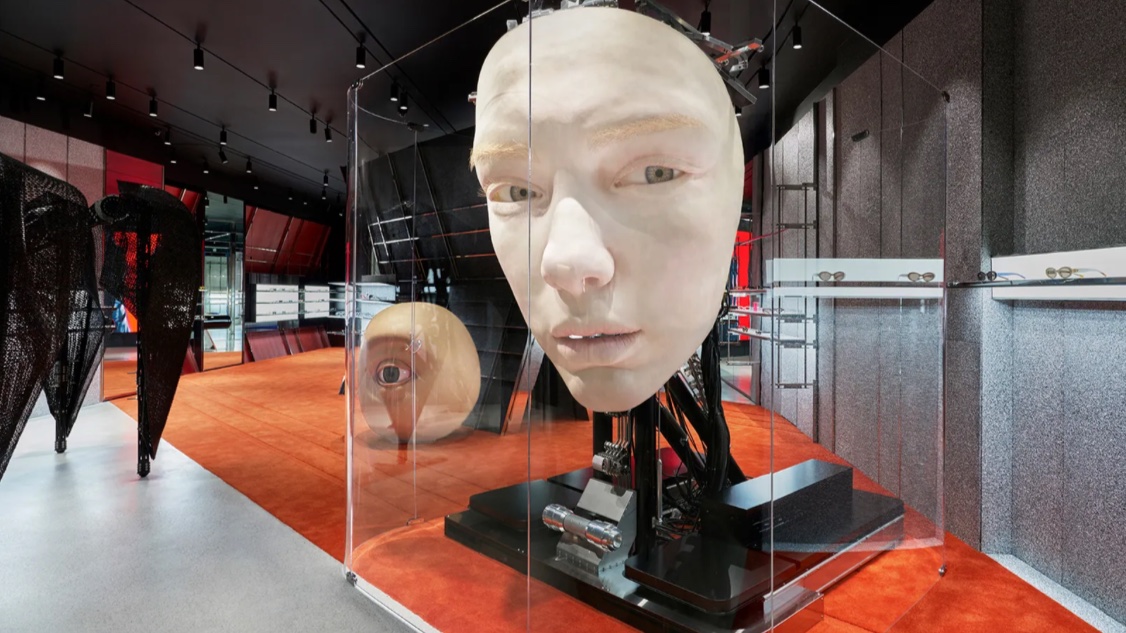
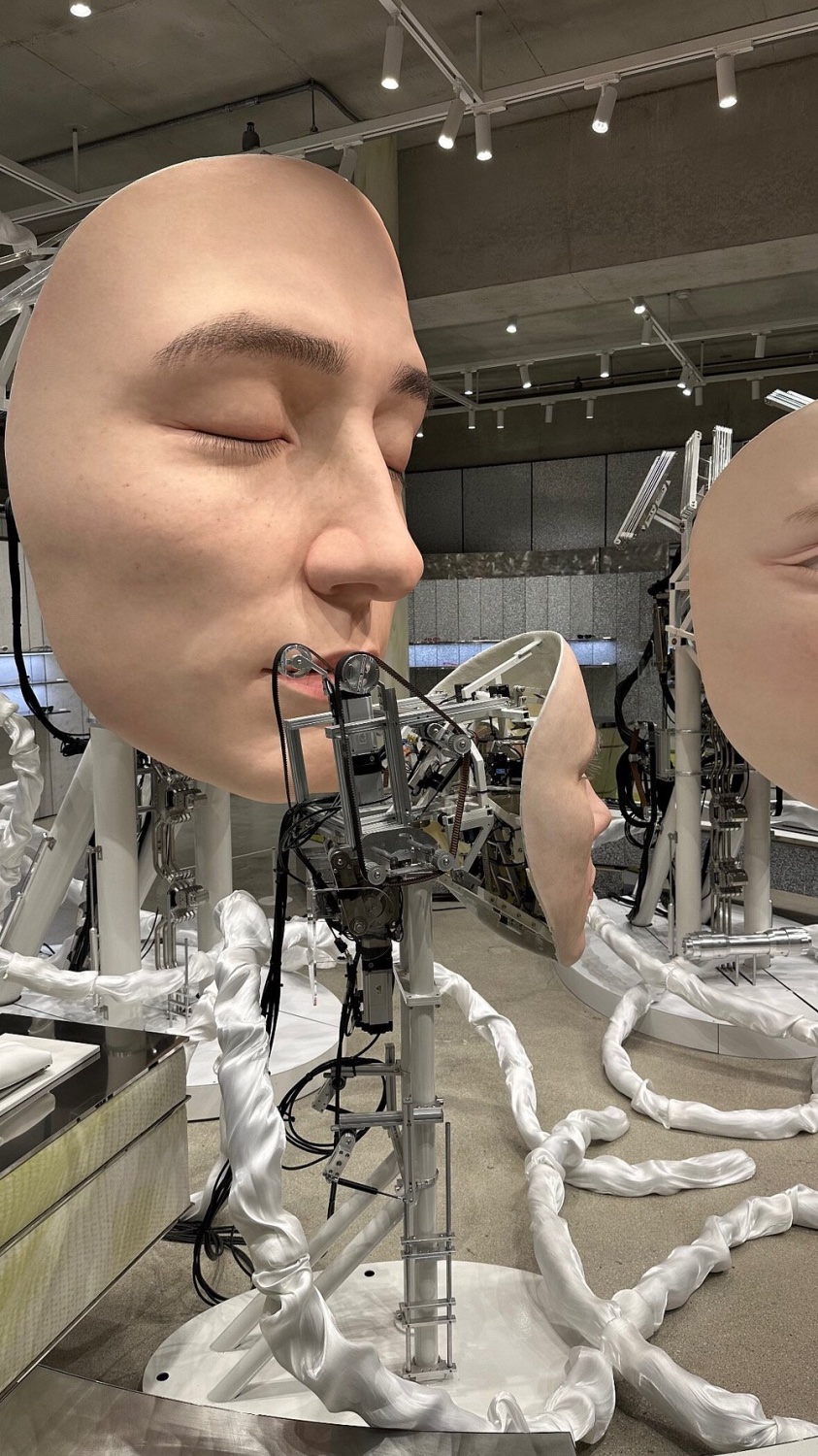
Take Gentle Monster, the South Korean eyewear brand. Here's a stat that tells you everything: six people design their eyewear. Sixty people design their store visuals. Every one of their 81 stores across 14 countries is a unique contemporary art installation — kinetic robotic sculptures, custom fragrances, custom soundscapes, seasonal rotations that ensure no two visits look the same. The Las Vegas store features three large-scale robotic faces with subtle movements and changing expressions, built in the company's in-house robotics lab. Research suggests 45% of customers visit primarily for the immersive art experience, not to buy glasses. This is the Peak-End Rule — the psychological principle that memory is shaped by the most intense moment and the ending — engineered into retail architecture. The surprise of walking into what looks like a museum and discovering it sells $250 sunglasses IS the peak moment. You don't forget it. You tell people about it. And you come back.
The sampling culture at retailers like Costco, Trader Joe's, and Eataly works on the same principle, but it's wildly underappreciated as a strategic tool. A 2025 analysis found that sampling campaigns drove an average sales increase of 95% for the sampled product — making it the single most effective in-store activation format tested, outperforming digital displays, endcaps, and every other format across 38 categories. Costco has made sampling so iconic that people joke about free lunch in the aisles, but the real insight is that sampling is a surprise-and-delight mechanism disguised as a product trial. You didn't come in for that lemonade. It appeared. You tasted it. Dopamine spike. Reciprocity trigger. You bought the box.
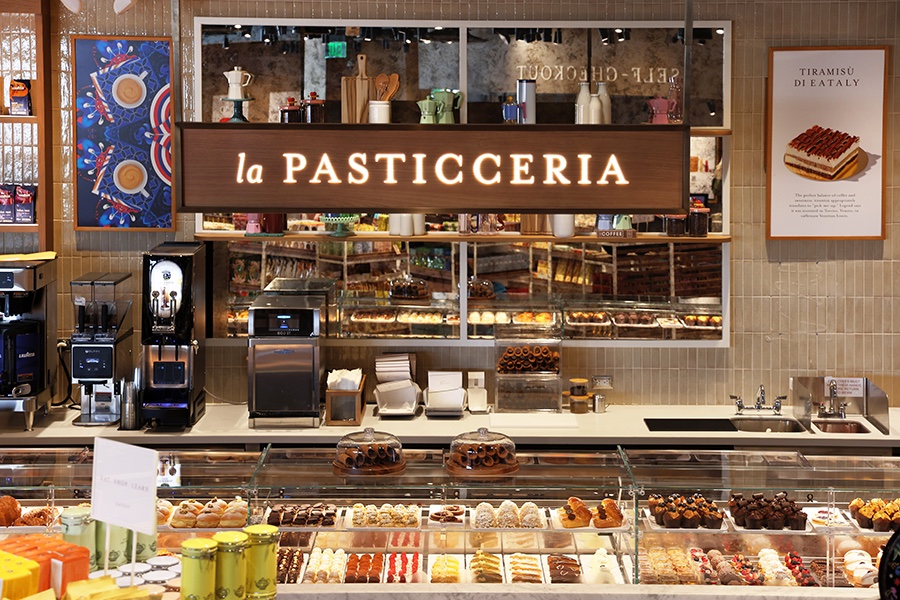
Eataly is the premium version of the same idea — the entire store is a sampling experience. Watch pasta being made, eat at the counter, take a cooking class, then buy the ingredients you just used. They opened six new North American locations in 2024–2025 and plan 20 within five years. CEO Nicole Helm has described the goal as creating "the experience of being in Italy — beyond being a grocery store." Every Eataly location includes full-service restaurants, quick-service counters, visible pasta-making stations, culinary classrooms, and a marketplace with over 3,000 imported Italian products. That's Playful Design (sensory immersion), Surprise & Delight (you came for groceries, you got a cooking class), and Community & Connection (shared tables, cultural gathering) — three pillars, all in a grocery store.
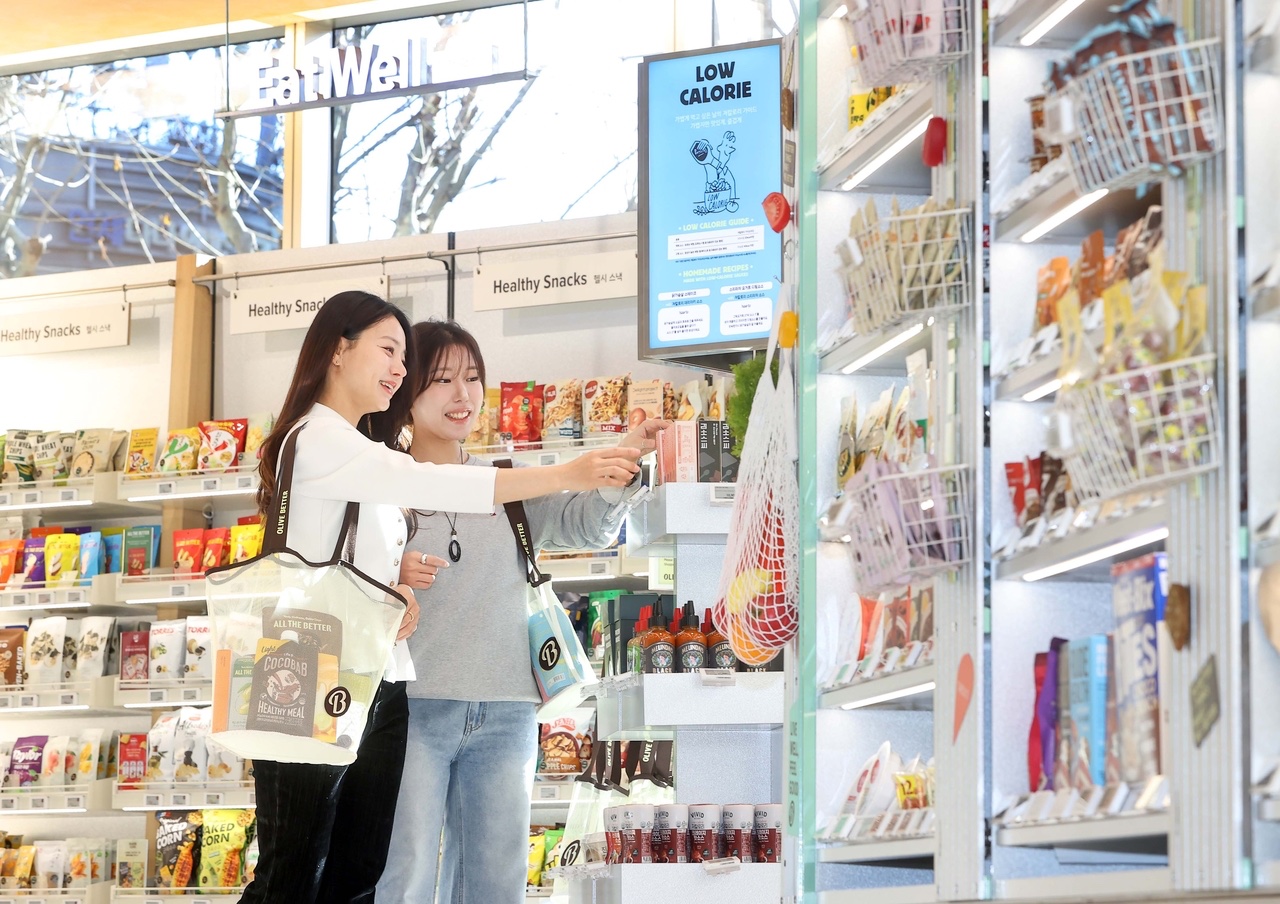
Meanwhile, the newest entrant from Korea is taking a quieter but equally strategic approach. Olive Young — the 1,370-store beauty retailer that has become a cultural institution in South Korea — launched Olive Better in January 2026, a dedicated wellness concept store. The first location in Seoul's Gwanghwamun district spans 430 square meters across two floors, stocking 3,000 products from 500 brands. But the organizing logic is what matters: instead of shelving products by brand or category, Olive Better curates around six wellness needs — Eat Well, Fill Well, Move Well, Groom Well, Rest Well, Care Well. That's Calm Advantage as retail architecture. You don't walk in and face 3,000 products. You walk in and face a question: what do you need today? The curation does the cognitive work for you. The parent company opens its first U.S. store in Pasadena in May 2026, with more California locations to follow, riding a wave where American shoppers spent $2 billion on K-beauty products in the 12 months ending July 2025. This is what the Calm Advantage looks like when applied to assortment strategy: not fewer products, but fewer decisions.
Here's the strategic takeaway for anyone leading a retail brand, or any brand with a physical presence.
The stores I've described — Rituals, Gentle Monster, Costco, Trader Joe's, Eataly, Olive Better — are not in the same category, not at the same price point, and not targeting the same customer. What they share is a refusal to treat the physical space as a distribution point. They've each answered a different version of the same question: what will someone get here that they didn't come for?
At Rituals, you came for hand cream and got a brain massage. At Gentle Monster, you came for sunglasses and got a contemporary art exhibition. At Eataly, you came for olive oil and got a cooking lesson. At Olive Better, you came for a serum and got a wellness consultation organized around your actual needs.
In every case, the unexpected gift — the surprise, the calm, the play, the belonging — is what earns the transaction. Not the other way around.
So the question for your brand is not "how do we make our store more experiential?" That's too vague. The question is: which of the four pillars is your store missing? And what would it look like to add it — not as a campaign, not as a pop-up that runs for two weeks, but as a permanent part of what people feel when they walk through your door?
Because in the Emotional Economy, the stores that will thrive are the ones that leave people emotionally better than they found them.
Hamutal "Tula" Schieber is the author of The Joy Dividend: How Brands Win by Reducing Stress and Sparking Delight (January 2026) and founder of Schieber Research. She helps leaders in consumer goods, tech, and beyond transform market insights into competitive advantage through emotional connection.
Originally published in The Joy Dividend on LinkedIn.