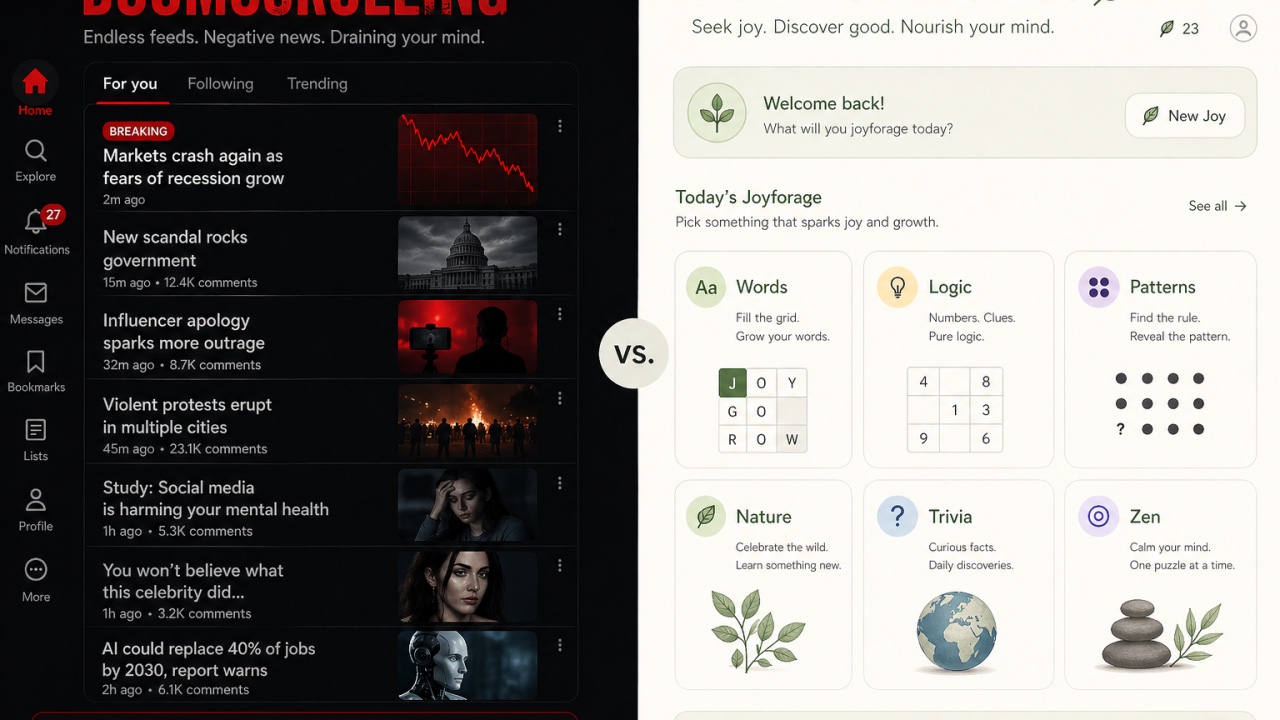
Somewhere in the last two years, a quiet swap happened.
The same person who used to open Twitter in line at the coffee shop is now opening NYT's Connections. The colleague who used to scroll Instagram between meetings is doing LinkedIn's Queens. The friend who texted you doom headlines at 7 a.m. now texts you her Wordle grid. Nobody announced this. Nobody got virtuous. They just started reaching for a different app in the same three-minute window.
Somewhere in the last two years, a quiet swap happened.
The same person who used to open Twitter in line at the coffee shop is now opening NYT's Connections. The colleague who used to scroll Instagram between meetings is doing LinkedIn's Queens. The friend who texted you doom headlines at 7 a.m. now texts you her Wordle grid. Nobody announced this. Nobody got virtuous. They just started reaching for a different app in the same three-minute window.
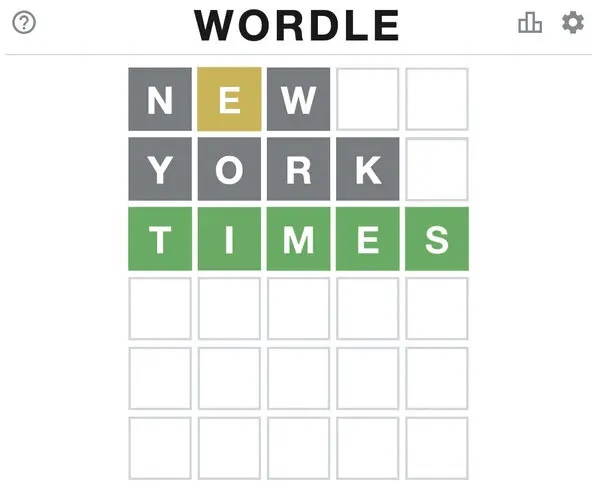
The window itself didn't change. The trigger didn't change — same pocket of empty time, same flicker of anxiety, same phone in the same hand. What changed is the exit state. One of these apps leaves you slightly worse than it found you. The other leaves you slightly better. Over enough mornings, the body learns the difference, and the thumb starts choosing.
This is not a digital detox story. People are not quitting their phones. They are quietly substituting. NYT Games was played 11.1 billion times last year, and ten million people open it daily. LinkedIn — the platform of professional anxiety — added games in 2024 and now has more than three million people doing Pinpoint and Queens every morning. Eighty-four percent come back the next day. Apple, Netflix, and a half-dozen news apps are reaching for the same mechanic. This is no longer a New York Times story. It is a pattern.
There isn't a name for the behavior yet, so let me offer one: joyforaging. The deliberate, low-stakes act of looking for a small, finishable bit of joy in the cracks of an overloaded day.
The puzzle is one form of it. So is the ten-minute walk, the perfect coffee, the page of a novel before the first meeting, the small Easter egg in a friend's email signature, the thirty seconds of light through the kitchen window. Joyforaging is what people do when they've run out of patience for the feed but still have three minutes and a pulse. It is the active opposite of doomscrolling. The doom comes to you. The joy you have to go look for.
The clearest case study of how a brand can engineer this — and almost lose it — is Duolingo.
The lesson itself is a small foragable joy by design. Three to five minutes. A finishable arc. A character who claps when you complete it. A visible ribbon of progress. Crucially, the lesson ends. There is no infinite scroll of conjugations. The owl tells you you're done, awards you a small ration of points, and steps out of the way. For about ten million people a day, the Spanish lesson on the train is the calmest, most agentic three minutes of the morning — a tiny, repeatable place to feel slightly more capable than they were before the doors closed.
But Duolingo is also the company that learned to text you in the voice of a guilt-tripping ex if you skip a day. The streak — the thing that was supposed to make the foraging easier to repeat — has become a stress tax for a meaningful share of users. People talk about "streak anxiety." They report doing a single half-attentive lesson at 11:58 p.m. just to keep the number alive. The original product is still a foragable joy. The notification system around it has become its own small doomscroll.
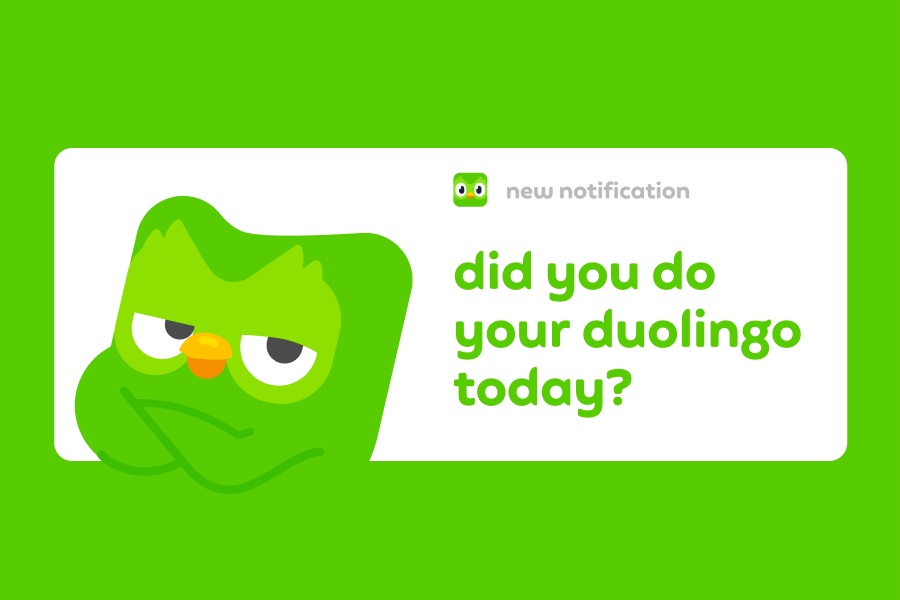
That tension is the strategic point. Joyforaging is fragile. The same brand can produce it and corrode it within the same product, often in adjacent screens. The lesson nourishes; the push notification depletes. The handwritten note delights; the eleven follow-up emails about "your handwritten note" exhaust. The package-delivered ping is a small joy; the "rate your delivery experience" survey that follows it is a small tax. Most brands engineer one and accidentally undo it with the other, then wonder why their engagement metrics rise while their affection metrics quietly fall.
The doomscroll era taught us something uncomfortable about attention: it is not the same as affection. People can be glued to a product they resent. The joyforaging era is teaching us the opposite — that short, finite, satisfying interactions earn a quieter and more durable loyalty than infinite ones, because they leave the customer better than they found her. But that loyalty is conditional. It survives only as long as the brand resists the temptation to extract more from the moment than the moment was offering.
The brands that win the next decade of attention will not be the ones that keep you on the app the longest. They will be the ones you forage for when you want to feel a little calmer, a little more capable, a little more finished — and who have the discipline to leave something worth finding, in three minutes, and let you go.

If you're wondering what you're optimizing for—or what's coming next that your data won't show you—let's talk: hamutal@researchci.com
My book The Joy Dividend published January 1, 2026. More strategic research every Monday—subscribe here.
Originally published in The Joy Dividend on LinkedIn.