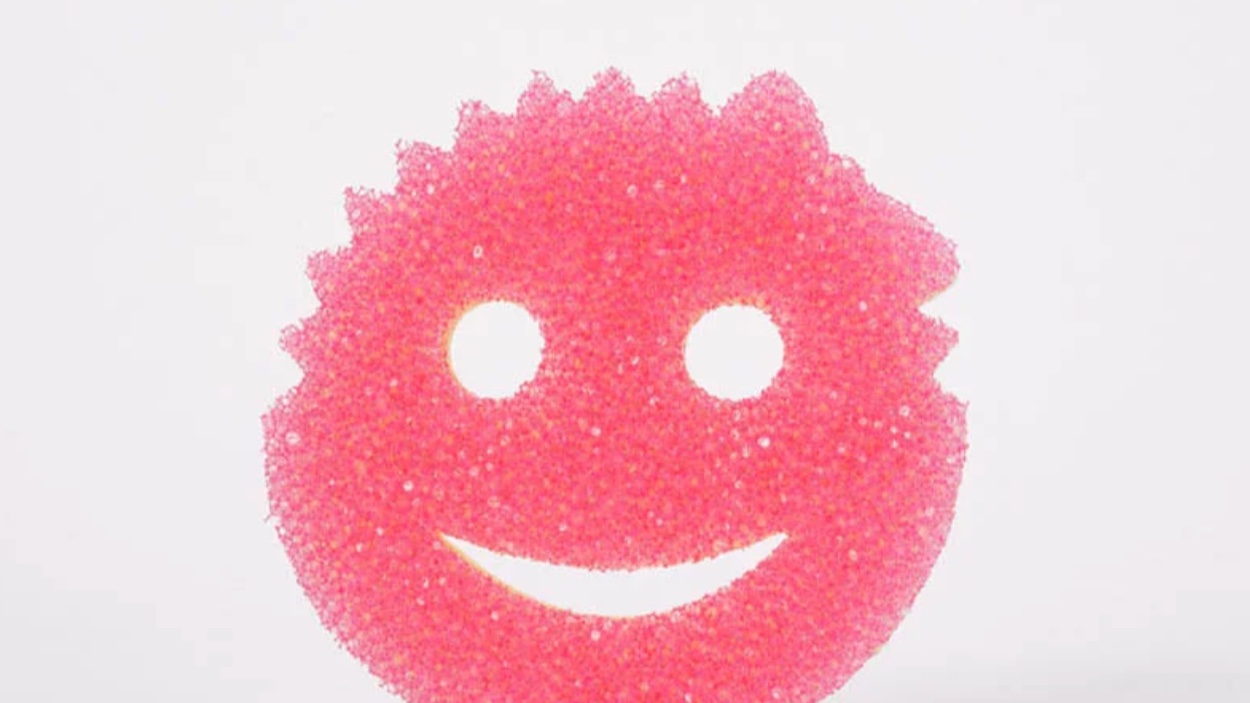
I knew something was up when my son, of all people, recommended a dish sponge to me. He was maybe thirteen at the time and had never once volunteered an opinion about cleaning supplies. But there he was, telling me I needed to get a Scrub Daddy, and explaining why: the design is both functional and funny.
He didn't know it, but he had just named the two things that separate a brand people tolerate from a brand people repeat. Functional is the floor — the thing works, it doesn't frustrate you, it earns the right to be considered. Funny is the lift — the small, unnecessary delight that makes a person bring a sponge up, unprompted, to their mother. Stress-free gets you kept. Joyful gets you talked about. My thirteen-year-old had compressed a decade of brand strategy into one sentence and gone back to his game.
You might know this already, but I didn't: the sponge had been functional for years before anyone outside a QVC audience cared.
Scrub Daddy's texture-changing foam and smiling face have been on shelves since its 2012 Shark Tank run. The product barely changed. What changed was the voice. Around 2020 the brand leaned hard into humor on social — entertainment first, selling second, the joke landing before the pitch. Its TikTok account crossed a million followers in early 2022 and more than doubled within seven months, and the business followed: Reuters reported the company generated more than $220 million in revenue in 2023, growing roughly 120 percent a year, enough that it hired JPMorgan to weigh a sale. Same product that had existed for a decade. The delight is what compounded it.
The territory Scrub Daddy owns? The smile. "Smile while you scrub" and the "smileshop" promise joy.
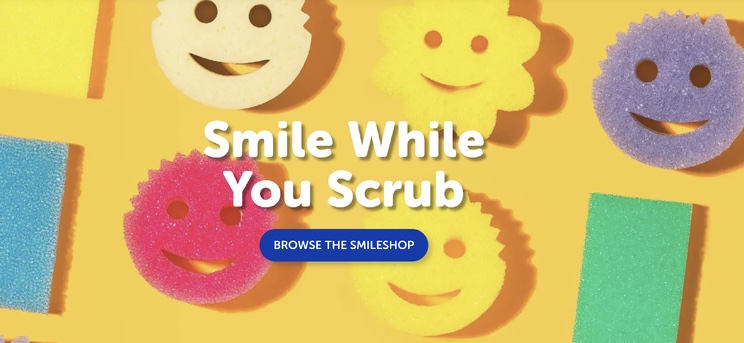
The social media strategy is the #iykyk humor, tongue-in-cheek, weird-leaning videos kind: In other words, the Duolingo playbook, in what's considered a low-involvement category.
We were taught that categories like this one don't work this way. Low-involvement purchases — sponges, detergent, dish soap, trash bags — get sorted into a box marked habit and price, on the theory that no one invests enough feeling in a four-dollar decision for emotion to matter. The brand's job, the thinking goes, is to be on the shelf and be remembered. Feeling is for the categories that can afford it.
But it is precisely in these daily, barely-considered tasks that differentiation can take the form of joy, because no one else is competing for it. When every rival is fighting over price, claims, and shelf position, the brand that introduces a genuine feeling is not adding a layer to that fight. It is changing what the fight is about.
Swiffer learned this a long time ago, by watching people clean. Before there was a product, P&G sent researchers into kitchens to observe the chore, and what they found was not a missing feature. It was a feeling no one had ever put on a survey: the small dread of wringing a filthy mop into a bucket of browning water, the suspicion that you were smearing diluted grime back across your own floor. They built the product to remove that feeling. According to Continuum, the design firm named on the patent, Swiffer launched in July 1999 and did roughly $100 million in the final four months that year, with more than 11.1 million U.S. starter kits sold inside a year. On paper, a better mop. Underneath, an uncollected stress tax in a category everyone had written off as routine.
Notice that Swiffer and Scrub Daddy won on opposite feelings. One took stress out; the other put delight in. These are not the same move — relief and delight sit on different axes — and the cleaning aisle, of all places, turned out to have room for both.
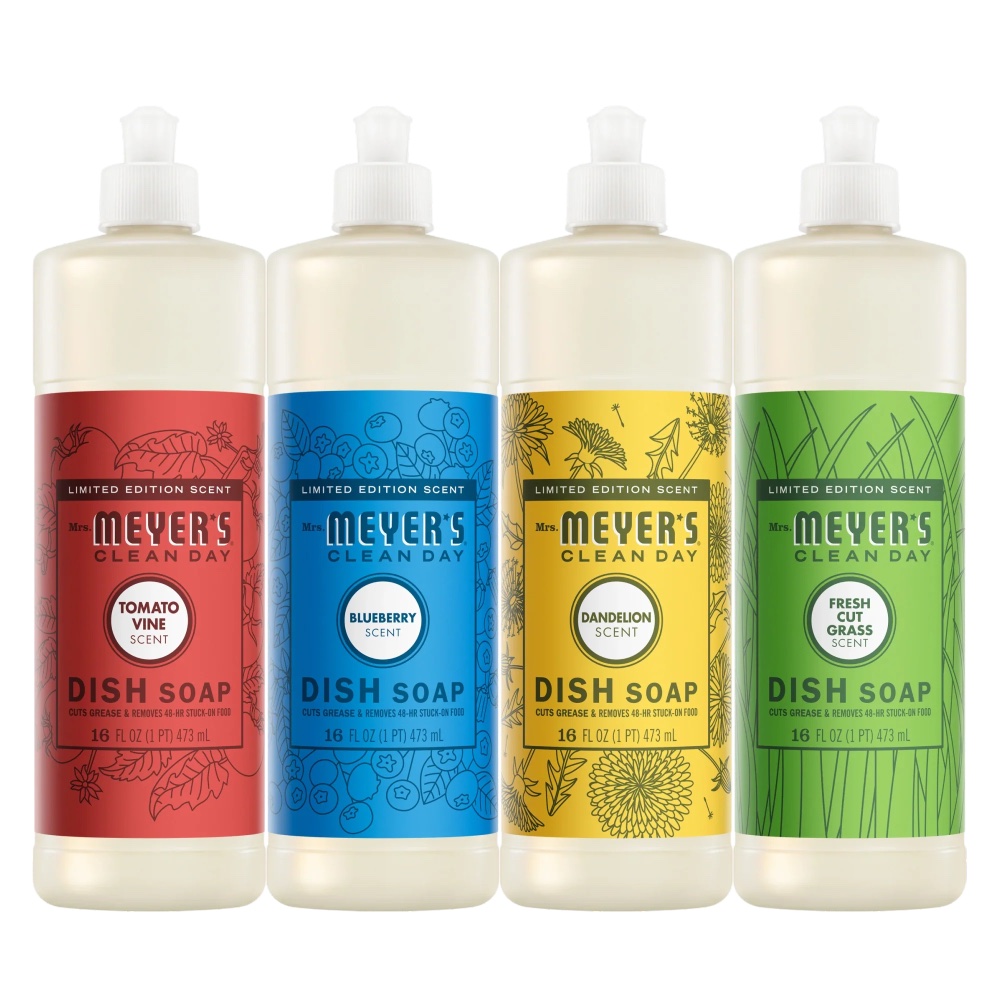
Dish soap makes the pattern hard to wave off. Method stopped competing on cleaning power and made a bottle people would leave out on the counter; Mrs. Meyer's led with garden scents and a homey, nostalgic register, reframing a chore as a small sensory pleasure. Neither led with the dimension the category had agreed to fight over, and both scaled far enough to be absorbed into SC Johnson's portfolio rather than stay niche.
None of this is luck. It is what the largest body of effectiveness data already predicts. Binet and Field's analysis of nearly a thousand campaigns in the IPA databank found that emotional brand-building drives stronger long-term sales, deeper loyalty, and lower price sensitivity — producing large profit effects about twice as often as rational, feature-led work. In the long run, as Binet put it, emotion is where the profit lives, because it moves both how much people buy and what they will pay.
So the question for any brand sitting in a "boring" category is not whether emotion belongs there. A thirteen-year-old can tell you it does. The question is narrower and harder: which feeling has your category been ignoring — the stress it never named, or the delight it never risked — and what is it costing you to leave it on the shelf, waiting for someone else's kid to find it first.
Hi, I'm Hamutal (Tula) Schieber. I've spent over twenty-five years as a market researcher, studying why customers choose what they choose — and what quietly makes them leave. I wrote The Joy Dividend to put a number on the feeling most brands don't measure: the stress they tax customers with, and the delight they never risk.
The Joy Dividend is a simple lens with a method underneath it. Every touchpoint is either taxing the customer or paying them — and because feeling is the one thing a competitor can't price-match, the payments compound into a moat. I write about that here every week so if you're interested in the subject, why not follow?
Originally published in The Joy Dividend on LinkedIn.