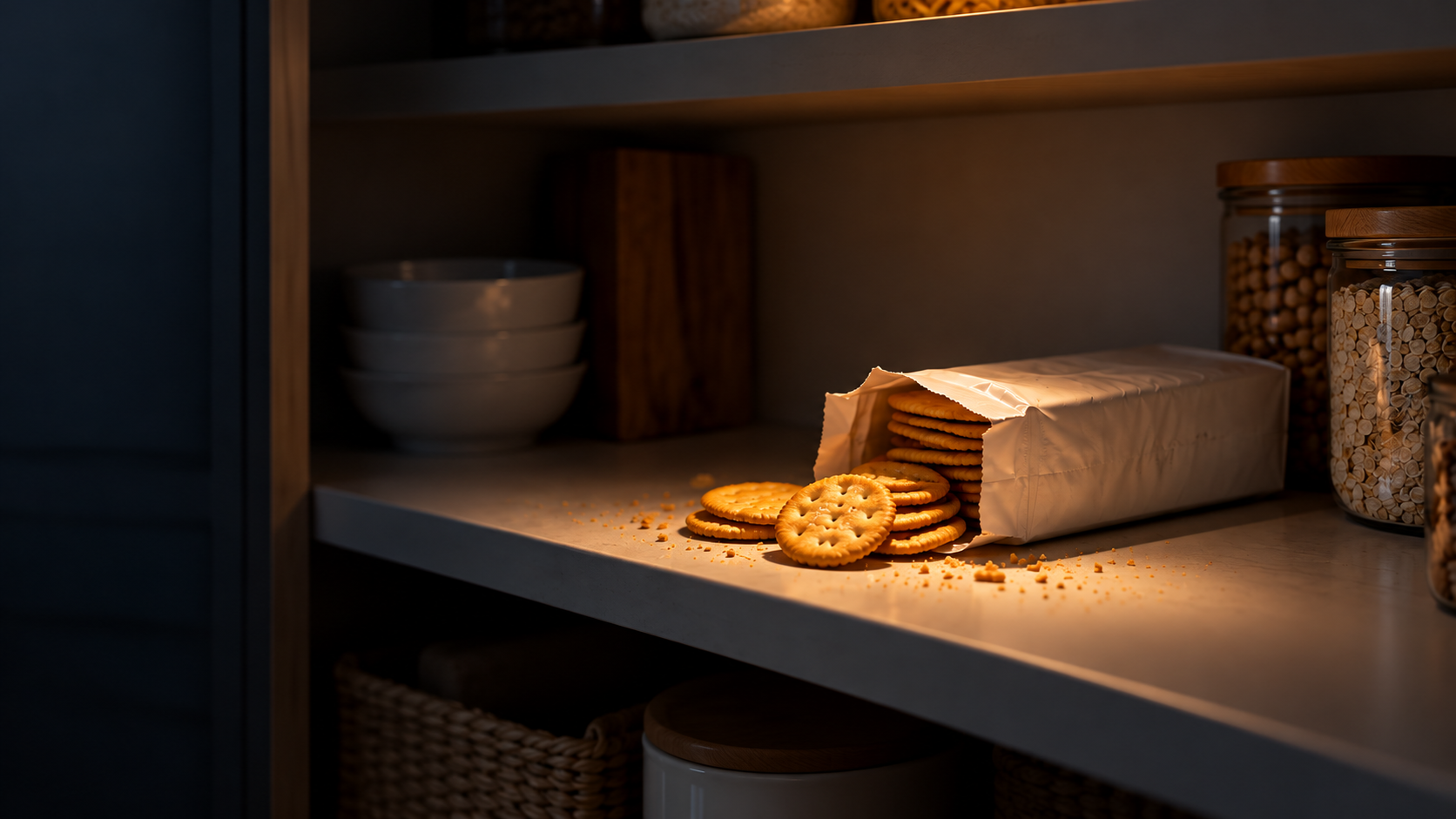
It’s 9:40 at night and you want three crackers. The sleeve tears down the side, half the crackers land in the cabinet, and the rest will be soft by Thursday. Nobody on the brand team will hear about it. It is still the product.
This is the first paper in The Joy Dividend in Practice, a series that takes the framework out of the book and into the work. It starts where the framework starts, with the Calm Advantage. The category is food and beverage, which spends enormous energy on the front of the pack and very little on what happens after someone gets it home.
The paper splits the target consumer into up to four people: the buyer, the opener, the preparer, and the eater. It maps the journey from the need that sends someone shopping to the empty package, with consumption as its own stage, because in this category consumption isn’t a moment. It’s a loop of opening, preparing, eating, and putting it back, and every pass is a chance for stress. It covers the food itself, from formulation to consistency. And it swaps touchpoints for load: what the person has to figure out, remember, or work around at each step.
It ends with eight questions for your next stage-gate review. A perfectly calm product can still be forgettable. Calm earns the repeat purchase. It doesn’t earn the love.
Next in the series: Playful Design.
Open the white paper