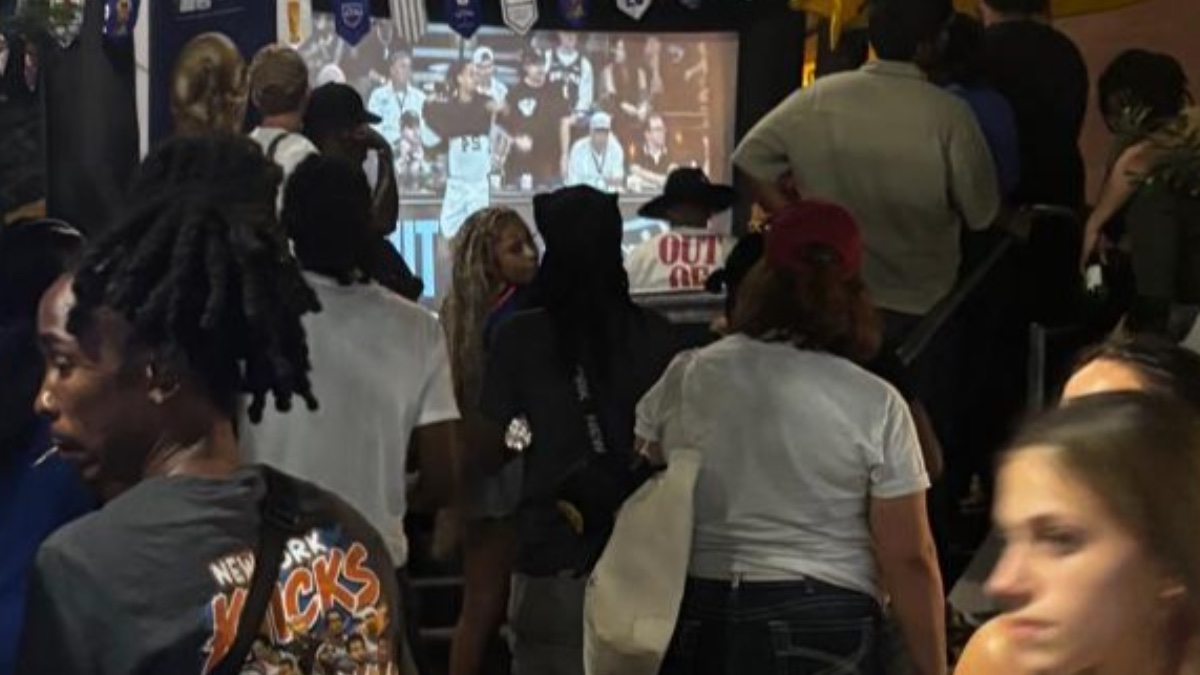
The couch in New Jersey had the better view. Higher definition, no transfers, no fare, a clean replay of every call. My seventeen-year-old and a few friends skipped it and took a bus, a ferry, and a subway into Manhattan to watch the Knicks play on a screen none of them owned, in a pizzeria full of strangers. A seat in the actual arena was priced for someone else's budget, so they did what kids with more want than money have always done: they found the free version of being there — a tv with the sound up, a crowd already half-formed, strangers who'd groan at the same missed shot. The tickets were out of reach. They built the arena anyway.
He wasn't the only one. Walking back from a Broadway show that night, I kept having to step around clusters of people frozen in front of screens — careful not to block anyone's view. The city had turned into a grid of watch parties. The Knicks run drew crowds the NYPD started policing like parades — one comeback win pulled roughly ten thousand people into the streets around the Garden, and the city set up more than a dozen official viewing sites with no-bag rules and frozen zones. Nobody needed the arena. They needed the room.
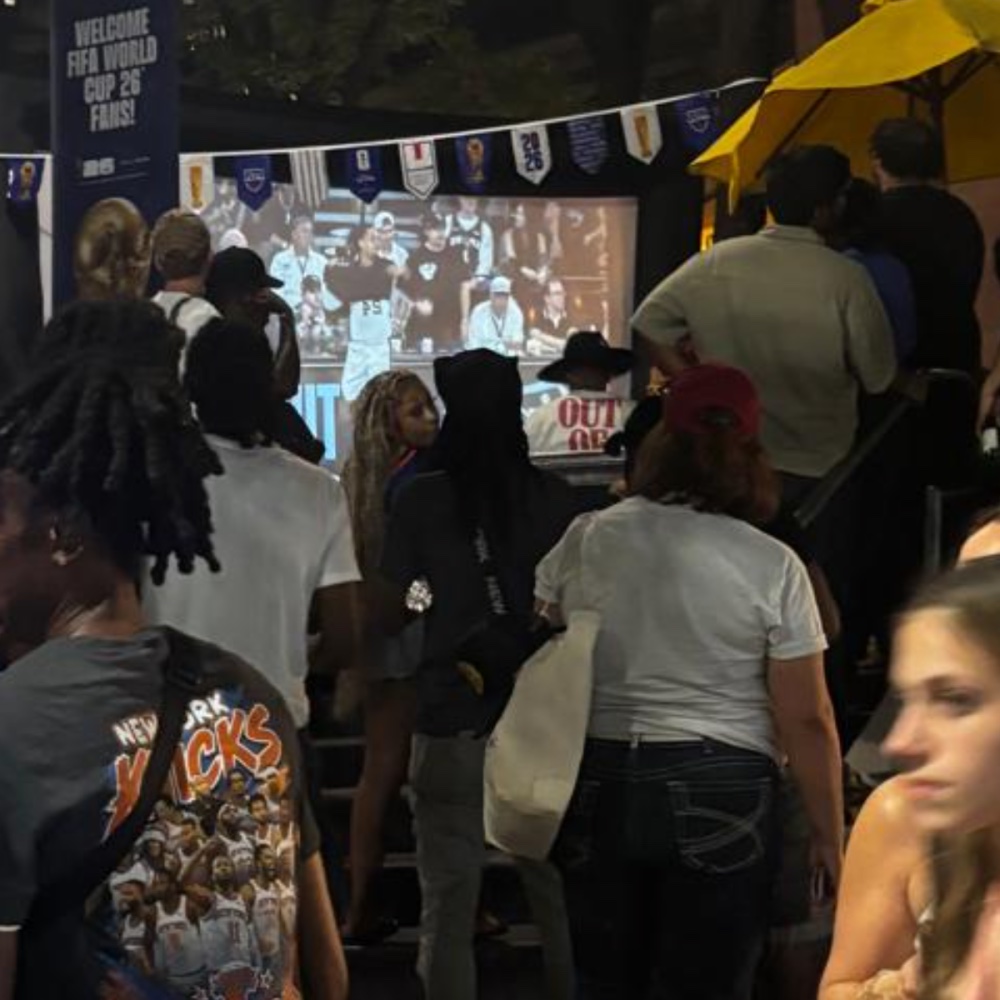
I keep turning it over, because everything about the digital life we built for my son points the other way. He has a perfect screen in his pocket and the whole game on it — alone, instant, effortless, in his room. He got on a ferry instead. The generation we engineered frictionless, solo products for is the one engineering company and effort back in, because the game on the phone is information, and the game in a crowd is an event. He even considered the late night journey back to New Jersey part of the adenture.
That's the thing the screen can't ship. What he traveled two hours for has a name old enough to be unfashionable: collective effervescence, the charge that runs through a group fixed on the same thing at the same moment. It isn't sentiment. People who feel it regularly report less loneliness and more meaning, and the lift holds even on the days they're nowhere near a crowd. The benefit was never in the game. It was in the room around the game. The arena has a paywall; the feeling doesn't — it reassembles, for free, anywhere a screen and a crowd find each other. A watch party is a machine for manufacturing that out of almost nothing, which is exactly why, in a world that keeps handing us our own private screens, it's becoming one of the few fourth places left where it reliably happens.
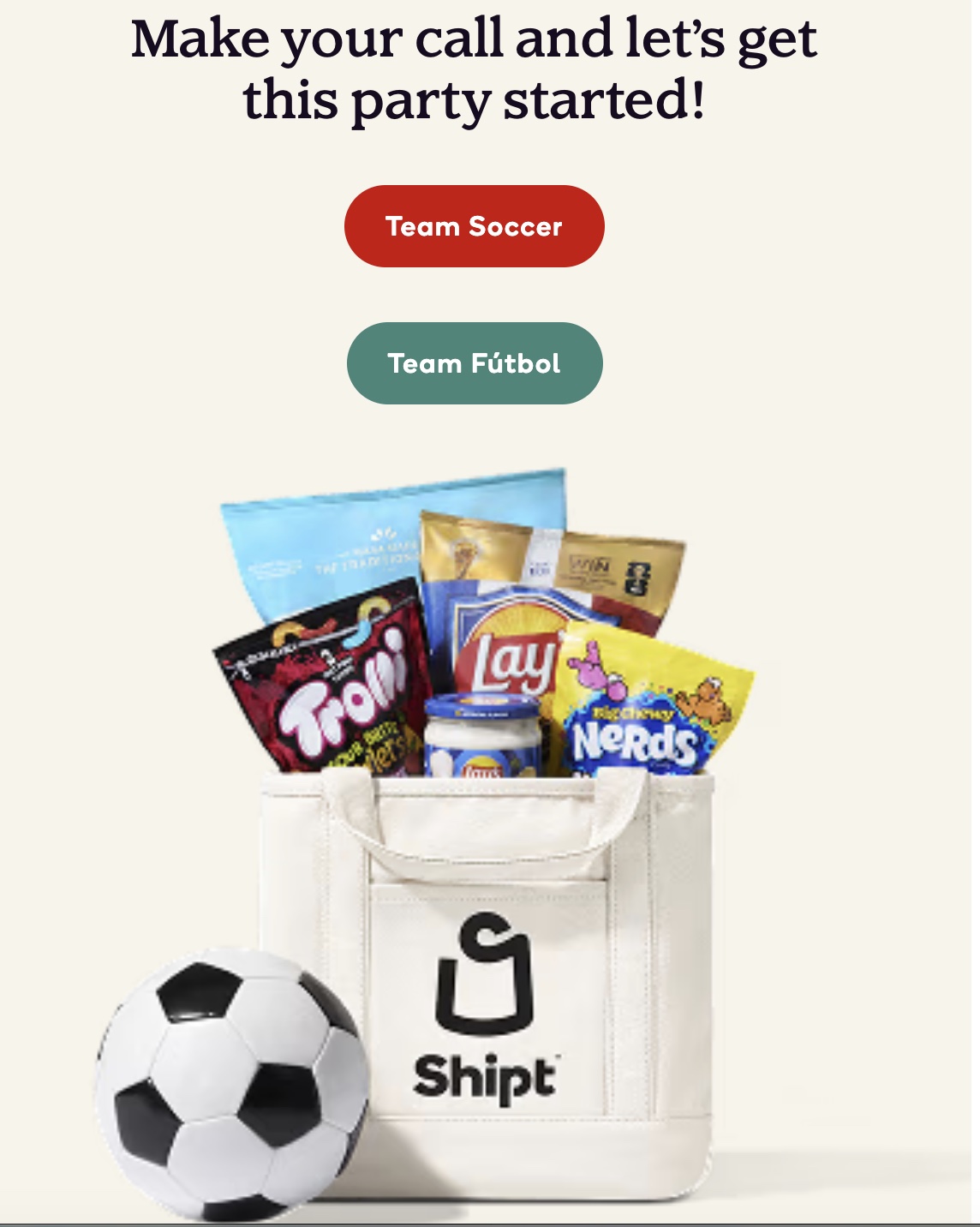
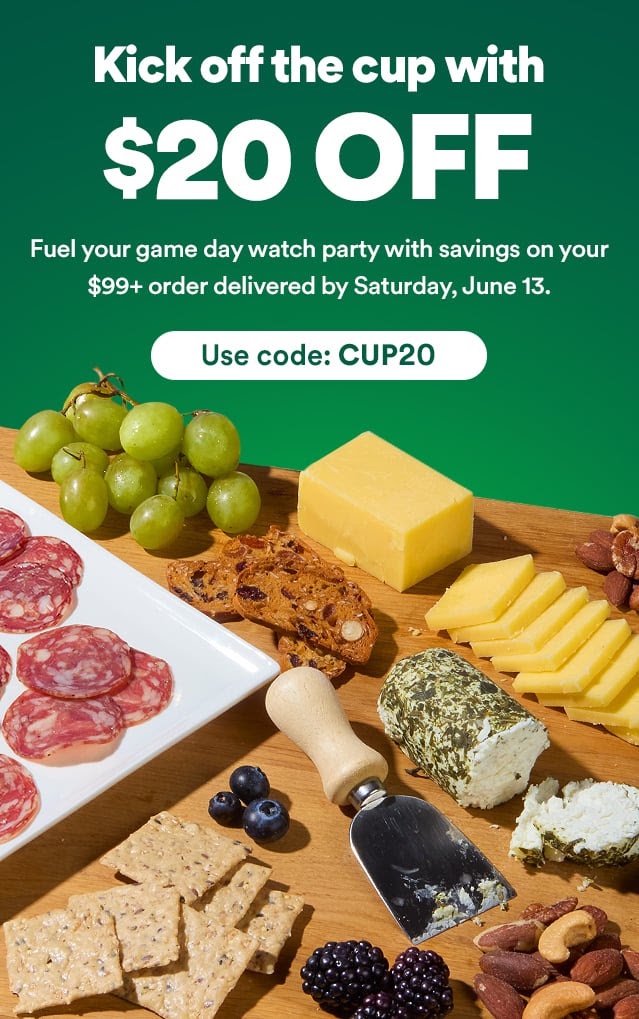
Brands have noticed the gathering. So have fans: when the Knicks reached the Finals, $10 tickets to a Radio City watch party resold for up to 140 times face — for a game playing free on every television in the city. People will pay four figures to watch something free, as long as they watch it in a room with other people. The demand for the room could not be clearer. The trouble is what brands have decided to do with it. The World Cup kicked off June 11 across the US, Canada and Mexico, with the final July 19 in New Jersey, and my inbox filled up overnight: a cheese board for the watch party, twenty dollars off the spread, same-day mocktail ingredients by kickoff, a parking spot near the action, a rental car for the drive. Five brands, one move — be the most frictionless way to supply a party someone else is throwing. Every one of them is solving the host's stress. None of them is touching the guest's joy.
That's the whole opportunity, sitting in plain sight. Reducing stress is necessary, and it is also a race everyone is already running; a cheese board, a grocery cart, a parking app and a car key are interchangeable promises to take a hassle off your hands, and when every brand competes to remove friction, the only thing left to compete on is price.
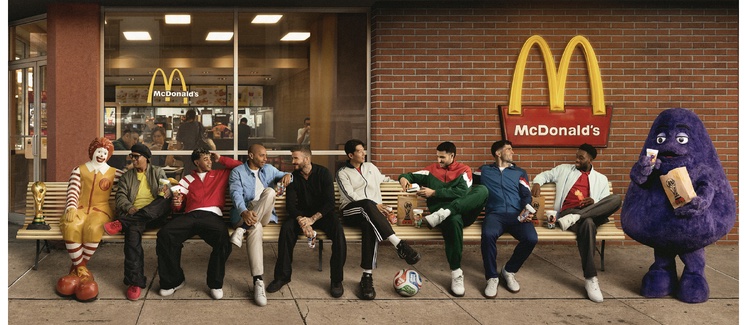
The brands that break through this summer are the few amplifying the feeling instead of catering it. McDonald's built its World Cup push around collectible cups featuring soccer legends — Christian Pulisic, the U.S. captain, is on one, and his pitch for it was a childhood memory of post-tournament McNuggets with his team.
Michelob ran a fan-voted player of the match, handing the crowd a decision to make together.
And Lay's put the product in the middle of any watch party:
None of those is supplying the party. Each gives people a role or a token — a way to be in on it, not just fed at it.
Which lands on the part that cuts against a decade of customer-experience instinct. We've spent ten years teaching brands that friction is the enemy — collapse the steps, kill the wait, deliver it solo and instant. But "embrace friction" is too blunt to be the lesson, and the precision is the lesson. The friction that turns a night into a memory is a specific kind: chosen, shared, and pointed at connection.
Nobody made my son take the ferry; he opted in, he went with friends, and the payoff wasn't the game he could see better at home — it was the crowd. Pull out any one of the three and the magic goes with it. Friction imposed on you, suffered alone, bonding you to no one, is just a bad experience. Friction you choose, share, and turn into belonging is the entire point.
That's a test a brand can run on itself: is the effort we're asking one people would choose, do together, and remember fondly — or one we're imposing, solo, to serve our own funnel?
Peloton is the cleanest proof the first kind is a business. The hard part of a workout is the workout; the friction is the product. The industry spent years trying to make exercise easier, and Peloton did the opposite — it kept the effort and made it shared: your name on a live leaderboard, an instructor calling it out, a whole community built around the exact thing everyone else was sanding down. People don't pay to suffer less. They pay to suffer together, on purpose, and call it the best part of their day. Convenience can't fake that. Only chosen, shared friction can.
The ones worth betting on won't compete on speed. They'll be the reason people gather, and they'll leave the gathering alone. My son rode four hours to stand in a room nobody sold him a ticket to. No brand built that room — but the smart ones are learning they could.
—
I speak about joy and stress as a moat in the Emotional Economy — to CMOs, brand and CX leaders, and the teams deciding what to build next. I wrote The Joy Dividend™ on the same argument this piece makes: lasting loyalty goes not to the brands that strip out the most friction, but to the ones that know which friction to keep. More at thejoydividend.com.
Originally published in The Joy Dividend on LinkedIn.